


I am finally getting to the piece that has been asking to be written since the first moment when my body clenched and rejected the word boundary when it was first laid out to me as the line drawn in the sand. Here’s me on one side, here’s you on the other, and if the line is crossed, the relationship is irreparably damaged.
The word boundary has risen in popularity in the past many years, and this growing concept has empowered us, belittled us, divided us, connected us, and confused a lot of us. As this phrase has permeated and shaped our relationship dialogues, I have found it useful to lean on the Spanish word for boundaries which is, límites, limits as another way to understand.
Boundaries as limits helps me see that sometimes when walls are erected and the finger is pointed towards the other as the reason; it could be that the wall is the stance we take when we are at our limit in communicating skillfully or limited in knowing whether we’d be received by the other. When many of us are formed by wounds that make the work of trusting and opening, the work of a lifetime, each of us is deserving of nimble hands that willingly want to open the safe of our inner realms that house both treasure and explosive material.
But in what ways do boundaries invite this kind of relational healing, and in what ways do boundaries block the kind of intimacy that allows for this mutual growth?
What the rising popularity of the word boundaries points to, is a real awakening for our wellness as beings with limits. A willingness of the heart to want to fully see someone, simply won’t match up with our very human capacities to hold a limited amount of space. And those who’ve been socialized to make themselves available to others at all costs, might first need to learn their limits through a fence.
In an ecological world view, all perspectives belong. And within relationship ecology I ask: how might an ecologically responsive worldview map onto our personal relational fieldwork? How might nature show us the way to seeing the nature of boundaries?
Because nature, which shows rigidity as breakable, permeable, subject to erosion, makes me question the way we might want to see boundaries as steadfast and unmovable. Rather when we see what we’re being shown at the edges, transition points, and places where water meets the land, we might get a sense that something else here is also growing.
It is here where we begin our journey of exploring boundaries as ecotones.
Boundaries, like all words hold within themselves the extremes of our cultural potentials. Definitions have always been coopted for the use of further domination and disconnection from love. Definitions may also offer an invitation, into a deeper attunement and recognition of the sacred in each and every living being.
The environment as creator of our relationship structures
When I get lucky, I get to write in the forest. Listening to the birds chirp and the bugs hum. I notice that the distinction between bio niches happens in subtleties. The slow transition as I descend a hill and feel the coolness of water’s presence gracing my skin, or when the smell of dry grass warms my senses as I emerge from deep forest cover into a wide-open field.
I intuitively sense that boundaries are here, yet they seem different than the ones that are broadcast as an unbreakable vow of clarity. They seem softer, changeable, naturally fading into one another, less of a line and more of an altitude shift, sandy riverbeds that get rockier hardened by clay when moving upwards.
It is alive in me that the boundaries we can imagine in our minds, and create with our words, are a reflection of the environments that shape us. When we are accustomed to walls and fences, hard straight lines, apartments and homes where our water source comes in separate pipes to our neighbors, we learn the skill of constructing strict impenetrable barriers around how we are perceived, how we are talked about, finding safety in impervious boxes, and clear demarcations of where we begin and the other ends.
There is nothing wrong with safety felt within the compounds of a fence line that makes impossible the looking at one another eye to eye.
Yet it is always in the nature of the world around us to birth wild roses that lunge across strict fence lines, resting their weight on top of edges, bursting with scent and prickly protection. As they twist themselves into every crevice, leaning against weakened edges, they push against walls, making what had seemed like a clear demarcation of who owns what a little more complex.
It is these wildly mystical forces of nature that brew in me a curiosity about how I want to define a boundary. If I am to choose, I’d like my relationship structures to be shaped by the dusty bone deep beauty of the high desert, the mystic mountains wildly alive with a chorus of creatures within the humid south, the rising and falling of rivers flooded by rain that carve winding canyons of colored rock.
Nature, I’ve learnt, wants to be known. She seeps into our home spaces as spores, seeds, glittering light, flooding our basements and wreaking havoc on our rooftops, collapsing what can’t hold the weight of a wild mother’s rampage. When we set our boundaries as immovable, what world are we asking ourselves and others to exist in?
If we set a boundary, clearly through text, reinforced by the clarity of tiny words etched across a screen of shared reality, when another trespasses, what would it be like to question our indignation with the simple curiosity of: what does this person want to be known for? And was our boundary a decision we made on behalf of another, or was it something intended to be held in collaboration together?
See, boundaries can be where the state draws the line defining what’s yours and what’s mine. Boundaries can point out the moment of transgression where who has crossed is my right to point and shoot. Boundaries, when shared as a mutual blending of where we begin to come together, can be as estuaries, the meeting point of fresh and salt water, the place where salmon lays her eggs, the feeding site for herons and egrets, above colorful rocks where life sways to the dance of iridescent seaweed.
The work of acclimation and the addiction to impenetrable impositions
When we look at a world map, we see clear lines and colored regions, names of states, countries, continents reflecting something back to us. When I was younger, I received this as the reality of what the world was. When we don’t know the stories of the past, everything we are told echoes as what has always been.
As my capacity has grown, and the impact of colonization is becoming the lens in which I perceive everything, I feel the immense heartbreak of what happens when people who had zero relationship with the land, the people, the history or culture, demarcated border lines that would impact millions of people1.
Complex networks of villages, kingdoms, and communities that came from a mutual-arising and relationality to each other, the waters, and the land, were subjugated to an over-simplification of borderlines telling people where they were supposed to belong. We’re living in the bitter aftermath of massive cruelties left by the partition in India, the arbitrary lines ignoring tribal languages and groups that forged modern day Africa, secret treatises by European army officials that granted overnight agency to determining a land’s fate2. Many of these borderlines continue to remain contentious and marred by conflict even after their makers have left.
We arrive at a time where a select few can dictate the rights to care for the well-being of our waters, airways, animal and plant kin of the land we live in interconnection to. It isn’t a surprise to me that within this reality, many of us, struggle with our own connection to our sense of agency, autonomy, and inner freedom to decide how to care for ourselves and our loved ones.
When we come from legacies of displacement and control, the slightest arc towards finding curiosity for our differences, identifying the limits of where our own emotional body ends, and learning how we can acclimate to each other by centering the dignity of each body, is a significant shift that calls for active work.
Perhaps the addiction to fence lines and borders drawn on maps attempting to translate mountain ranges, rivers, forests, and desert dunes with thumb sized border etchings of these vast terrains come from the fear of doing the work to attune to these constantly changing edges. That taking the time to sit within the transitions of two ecologies meeting in their full ecotonal embrace, means releasing the clarity of what can be controlled by you and what can be controlled by me.
Rather, the ecotone reveals an entirely new entity. It is both unwieldy in what might find home here, and it reveals within itself the edges of collaboration.
The ecotone in its vastness holds a broad range of messy process when we collide at these edges and discover that another’s subjective perspective starts to smudge what we believe is right or wrong. Whether we see this place as a site of collaboration or a place of conflict represents the way borders are managed beyond this little landscape of our home spaces.
When we slow down, we might discover there is a gentleness to the ecotone. One that holds our humanity in a shared understanding that to transition, to attune, to be at the edge requires a practice in faith, in surrendering to our smallness of not knowing what will emerge when two places meet and converge.
To hold on just a little longer before drawing the line, before marking land that refuses to stay still with boundaries that defy the wisdom of our earthly elders, means choosing to collaborate at this site of difference. To humble ourselves at the edge of divergence and to reveal exactly what this place of meeting is asking for when we turn to listen.
Within the specificity reveals the potency for relational collaboration
One of my friends Wei-Li once remarked to me that, creative collaboration is a lot like dating.
It hit me hard to hear this, and I felt in his expression the familiar heartache of difficult collaborations and romantic relationships in decline. Funnily enough, many of my past lovers and romantic relationships got stuck in trying to figure out whether our love was meant for creative collaboration or companionship, while many of my friendships reflected the bonds of lovers and partners much more than friendly companionship.
It’s hard not to get caught up in the whirlwind of possibilities in a collaboration. The way that two or more people can mix and meld their unique gifts to cultivate something larger than each person can create on their own is pure alchemy. Our lives are a testament to two bodies merging passing to one another the river of life in a spiritual handshake, binding across time, weaving family, meaning, relation through blood. Collaboration, in its essence is the origin of creation, the yin yang pushing and yielding its edges to birth all possibilities.3
It’s unbelievably beautiful to experience first-hand the magic of combining forces. And like most fields that rely heavily on relationality to thrive, the conditions for long term sustainability is unlikely to evolve without a healthy dose of discernment, rigorously practiced skillfulness, and a willingness to allow the relationship to reveal our darkness just as much as we require the other to be accountable for their blind spots.
Recently, when organizing the mugwort festival4, I was offered feedback around the absence of boundaries that led to my needs not being accounted for. This they saw, impacted the collective when I had said little to name my needs yet was still disgruntled by how the event went.
It had me reflect on the difficulty I have always felt in naming to my collaborators my limitations in a way that could be received by them. I could express worry, uncertainty, and at my worst vaguely gesturing towards, “trusting the spirit of mugwort,” as a cryptic attempt to say: I would like us to have a different approach to inviting guests!
In hindsight I could see my desperate yearning for partnership was like a dog wagging their tail to a cat trying to be seen and attuned to, so vague and incomprehensible compared to making a direct request that could’ve made the event into something that worked for both of us.
In our debrief, it was revealed that part of the dynamic was my passive approach to being met, and my counterpart’s fear of being dictated. Both of us led from our wounded parts, me not trusting that my vision would be respected, and him feeling fear around being controlled or left out. We both participated in a pattern of evasion, and in doing so, we created a gaping hole between us, each hoping that in the confusion, a miracle would emerge from the cracks.
I see this happen often. The fear of naming with specificity what we want as a powerful strategy to meet our needs for connection. When we hide what we fear might be seen, we believe we can maintain the connection by seeming appeasable. A truly brilliant way to keep us safe within a status quo that has long exiled us for difference, divergence, and desire. If on the surface we can appease, we can ostensibly on our own, try to get our needs met.
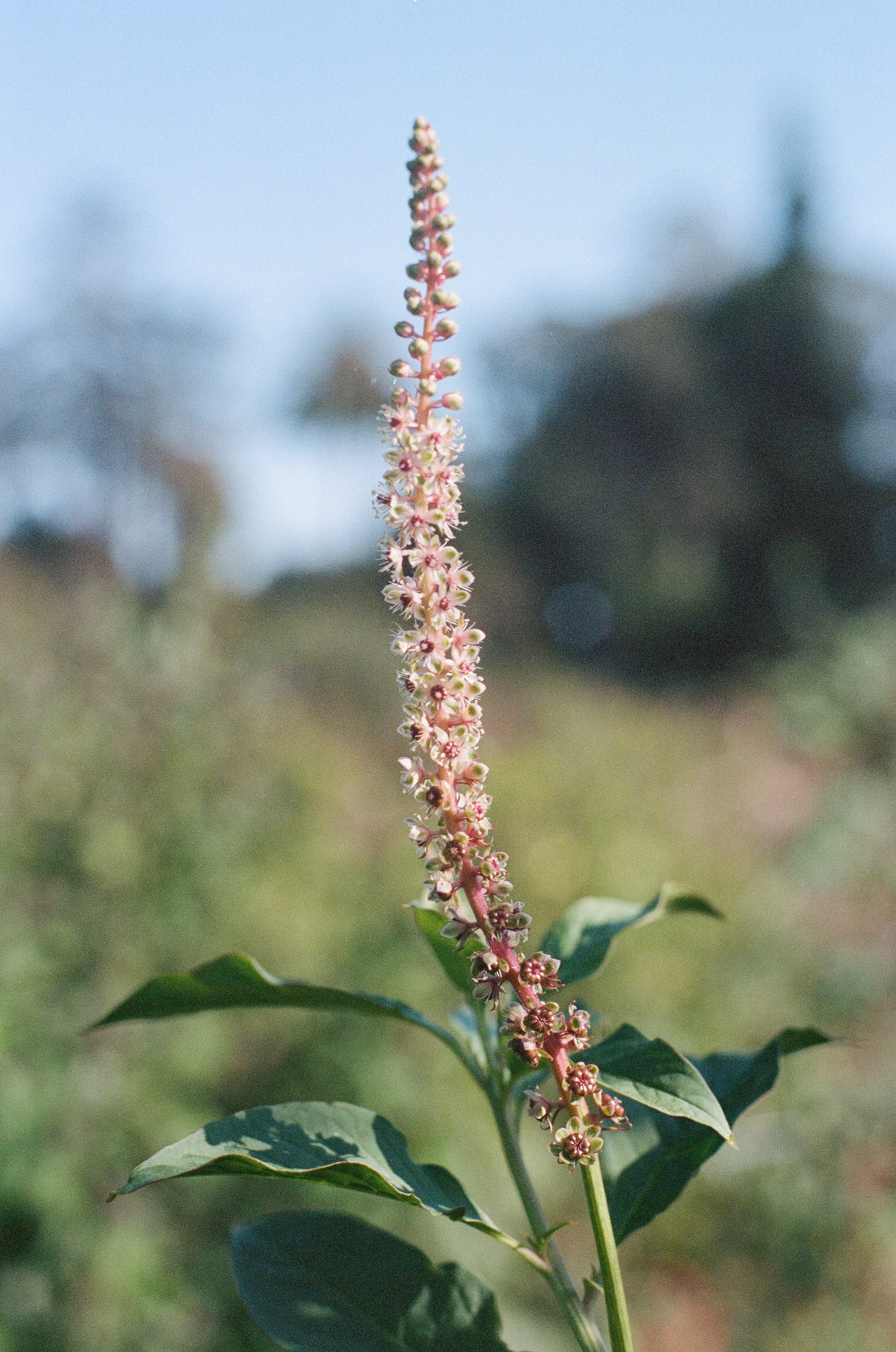
One of my friends Lisa reminds me: it is always faster and better in the long term to work together. Always. She tells me this as we go for a walk in the woods above root networks communicating and passing nutrients to each other by way of mycelium.
It’s one of those adages where I can’t quite point to the evidence but feel in my body as I see our technologically advanced world bolstered by war and unnecessary suffering. It might look like we’re in a time of great abundance, but what timeline are we looking at when we call this success? A lifetime? An oaks lifetime? Do we calculate the dead and the disenfranchised when judging our successes?
To truly collaborate, we must reveal to ourselves and to others the specificities of what is or isn’t working, knowing that the distance in which we interact could widen. In the specificity we are genuinely able to ask others to meet us in tangible and realistic ways. When we simply say we are pissed or disrespected, we give little information in how we might be supported.
To take on the responsibility of knowing how we can be supported sounds basic but in truth is an extremely fulfilling yet rigorous task. It requires us to understand ourselves on a day to day, moment to moment basis. It requires sitting with our cycles, phases, idiosyncrasies, and to make ourselves permeable and open to feedback from those closest to us.
It takes understanding our own ecology with such tenderness, attention, and faith, that we know exactly where we might need to clear the trees to make room for what nourishes the soil. We must have the curiosity to understand that knowing the history of our water helps us know where there’s more sand, rock, or clay in the soil, pinpointing the place for a home that can be built to withstand sinking or flooding, all the while still facing the southern light in the cold of winter.
Our specificity starts here, in our original homelands of the body. When we grow faith in the clench of our stomachs, the freezing of our voices, the full exhale of our breath, the micro signs we can witness within this first ecology we were born into, our partnerships and collaborations become the place where we must notice how to attune to our own selves in service of a greater than one held vision.
Boundaries when shared, make the work of loving a reciprocal act
I have not always had the greatest insight into the limits, bounds, and specificities of my own ecosystem. Being socialized as a woman in a Chinese culture has meant for the most part, my needs have been buried underneath layers of cultural expectation.
It has been from this place where I’ve required relationality to teach me what overstepping limits leads to. It was shocking when I realized that my anger and volatility which I had grown up being told was part of my genetic makeup (sometimes looked upon as a devil’s mark, I had inherited and would need to hide) was actually my body responding to being pushed past the edge of where I could remain whole and dignified.
In this process of discovering my edges, not everyone has stuck around. In the past my family members would chalk this up to, “this is why you can only trust family,” yet as I persisted in enveloping each broken relationship as scar tissue, I began to more deeply understand what was happening underneath all that conditioning.
What began to astound me as I continued this process was the development of relationships that would hold my limits my boundaries alongside me. They would suggest that we schedule a meeting with buffer days in between, knowing that before leaving for travel I would probably be doing the most to prepare my home for my absence. They would suggest I ask for more compensation knowing I had expressed financial insecurity even if it would impact their own finances. They reminded me of my own tendencies to overwork and suggested I take the day off even if it meant more work for them.
I too found myself noticing the times in the day where my beloveds were more tired, suggesting times to check in when I knew they would be more resourced, arriving an hour early to be with the children knowing that it takes double the time to leave the house as a family.
This work of attunement, this subtle shift in the way we relate to permeability, to who’s responsibility it is to know when we are at the verge of overwhelm and burn out is something that doesn’t have to be navigated all on our own, and when it is navigated alone (speaking from experience) comes out in list form, in hard rules, in strict walls that leave no space for questions.
It is in the aloneness of a home that can’t be shared where hard and rigid boundaries reflect the physical walls as representatives for safety.
It is in the lack of attunement to the land and refusal of a deep understanding to what has been there before where drawing lines to demarcate ownership seems sane.
It is in the discomfort of intimacy where we are faced with the relational reality of how specific and human each boundary is.
There are times when our boundaries will soften when we feel the safety of kin who account for our feelings regardless of whether our boundaries were named as reminders or as a strict regulation. When we trust that these places of convergence require attention we might rejoice in our permeability as beings that have always required collaboration to survive.
And in this recognition of this sacred home of the ecotone, we return to what’s here. We integrate who’s around, and we perceive ourselves as important indicators of how to inhabit collaboration.
To attune is to honor, and to share in this attunement, is the groundwork of relational ecologies that recognizes boundaries for their potential as sites of discovery, a diverse range of possibilities, and the aliveness achieved when two bodies meet and integrate the gifts of the other.
Thinking here of Korea being split by US & Soviet forces, the Berlin conference that split up complex tribal networks into modern day Africa, Indian partition flattening land based language groups and faith traditions into two categories, Vietnam split by Europeans that led to the Vietnam war amongst many more examples…
Sykes-Picot agreement made in secret between Great Britain and France that split up the Ottoman empire into countries that could be used by people and powers who had no relationship with land/people/language.
https://dao-de-jing.com/chapter-42, The dao births the two (yin yang) the two births the three, the three represents the axis of change, the mysterious pulsating movement between yin yang, that births all things.
This festival is a community run event that has been coalescing for three years now. It started out as a ritual to honor a relationship death + community harvest and has now added elements of asian-diasporic reclamation that inspires to connect our roots with the globally prolific plant, mugwort.
Wonderful work as usual. Thank you.
I hope it warms you to hear that this will be read and discussed in a student seminar at Charles University, Prague. Take care <3