



Relationships have long been woven by tendrils of commitments, spoken and unspoken. Tiny ones, large ones, life-long ones, “for now” ones, unwilling ones, ones that scratch a curiosity… and quiet ones.
Many of us long for commitments to ourselves, wanting the devoted wife, husband, partner, friend, community, that calls to us with an unwavering loyalty for us regardless of how much we might reject the other. There’s a fantastical reverie portrayed in our young-adult-films-and-tv-shows where even after an explosive rejection of our lover, they still show up at our door, desperate and here to do whatever it takes to be together.
This is the rom-com equivalent of soulmate, the golden standard in which love takes notes from, and it is love devoid of the reciprocity, relationality, and reverence in which our ecological world calls for. Hyper infused with our histories of ownership and servitude, commitments that are loudly announced, claimed as all-enduring despite all challenges, hides the use of these statements as anchors onto others for our own safe keeping. When we secure the loyalty of another by promising the world, we use relationships as anchors, places we can count on to lean back on for safety. When we use people as assets for our own security, we think we can finally turn towards other aspects of our lives, securing the nest in which to launch our lives from.
Yet this practice of parent-ifying our relations minimizes our availability for true partnership. What we long for when we call out to commitment is the trust that we may explore within the holding of intimacy and return changed and welcomed with open arms. To be an adult means we must recognize that relationality is neither tic for tac exchange nor being parented into safety. It means having the capacity to accept ourselves before expecting it unequivocally.
To embark, we must learn to read the night sky that tells of a quieter form of staying with.
All around us, the beings of the earth show us quiet commitments. We are quietly nourished by billions of beings, linking each chain between life and death, never demanding anything in return. When we see reflected within ourselves this same generosity of spirit within, recognizing that our staying is not for the other but for our own unfolding aliveness, our quiet commitments steady us not by way of certainty but by way of reminding us of our place as beings that have been endowed with the love of the heavens and the wisdom of the earth.
“Even after all this time, the sun never says to the earth, ‘you owe me.’ Look what happens with a love like that: it lights the whole sky.” –Hafiz 14th century Persian Poet
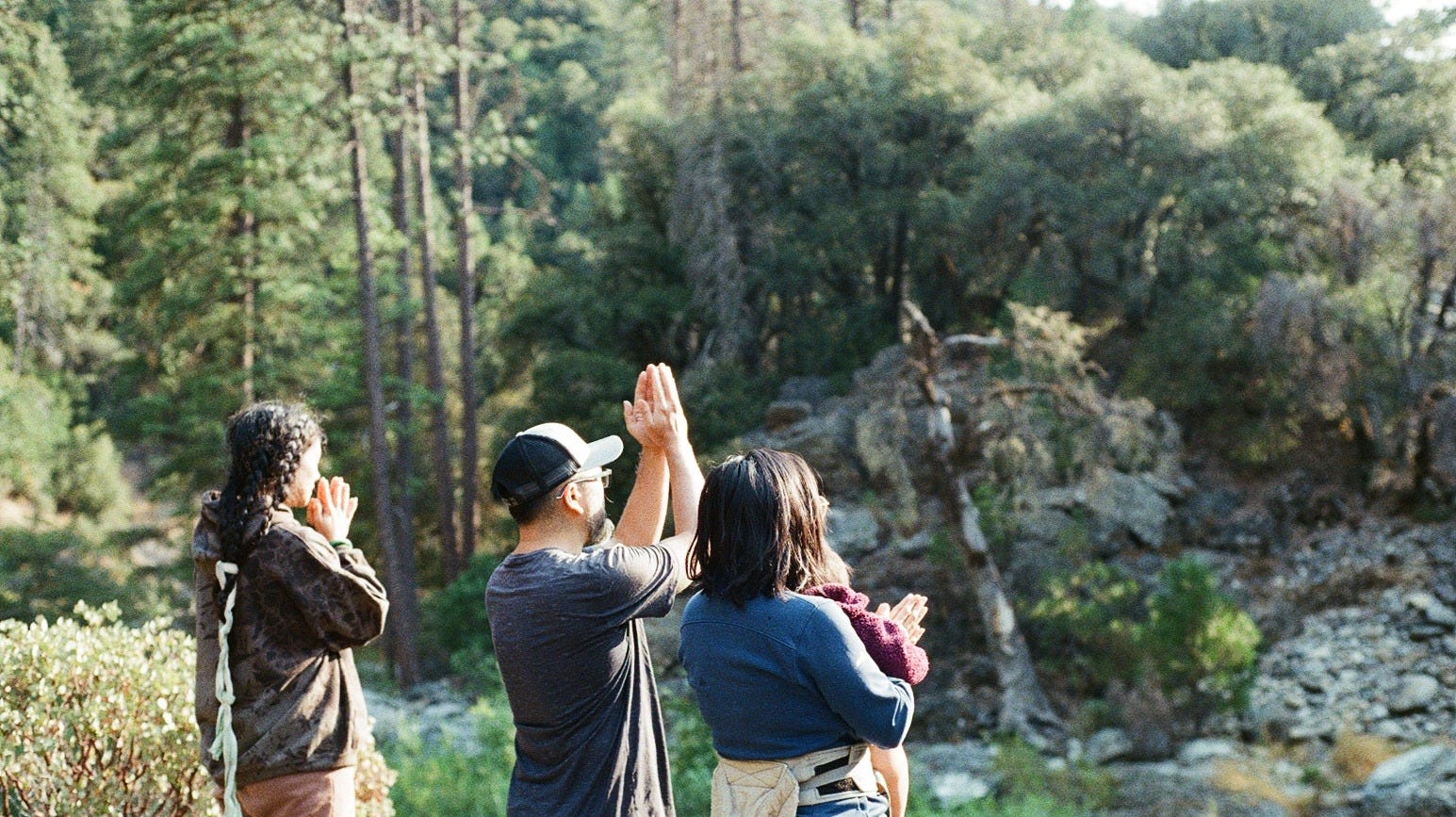
Releasing together; a threshold at the gate of transformation
Commitment, if traced to its Latin etymology, hails back to the Latin prefix Com, and the Latin verb Mittere. Com meaning, “with, together,” and Mittere a verb that signifies a “release, letting go; to send, to throw.”
How is it, that one meaning of this word commitment is: releasing together? I think back to all the times where letting go in a relationship started with one person’s refusal to relate, or the subtle withdrawal of another’s energies overtime. It is extremely rare to witness a process of letting go as a route traced together.
When endings arrive in relationships, we find ourselves at a threshold. It isn’t a matter of if, but a matter of when. The origin of the word threshold comes from the name of the doorway to a threshing room, from a time when our relationship to the harvest meant life or death. A threshing room was where grain would be separated from the stalk. Where what is life giving is separated from what is no longer in use.1
These thresholds signify a shift. Subtle like the changing of seasons, we suddenly realize that the grasses have turned brown and dry. When our relationships arrive at this precipice of determining what is life giving and what must be shucked away for compost, we are faced with what within each of us is ready to go.
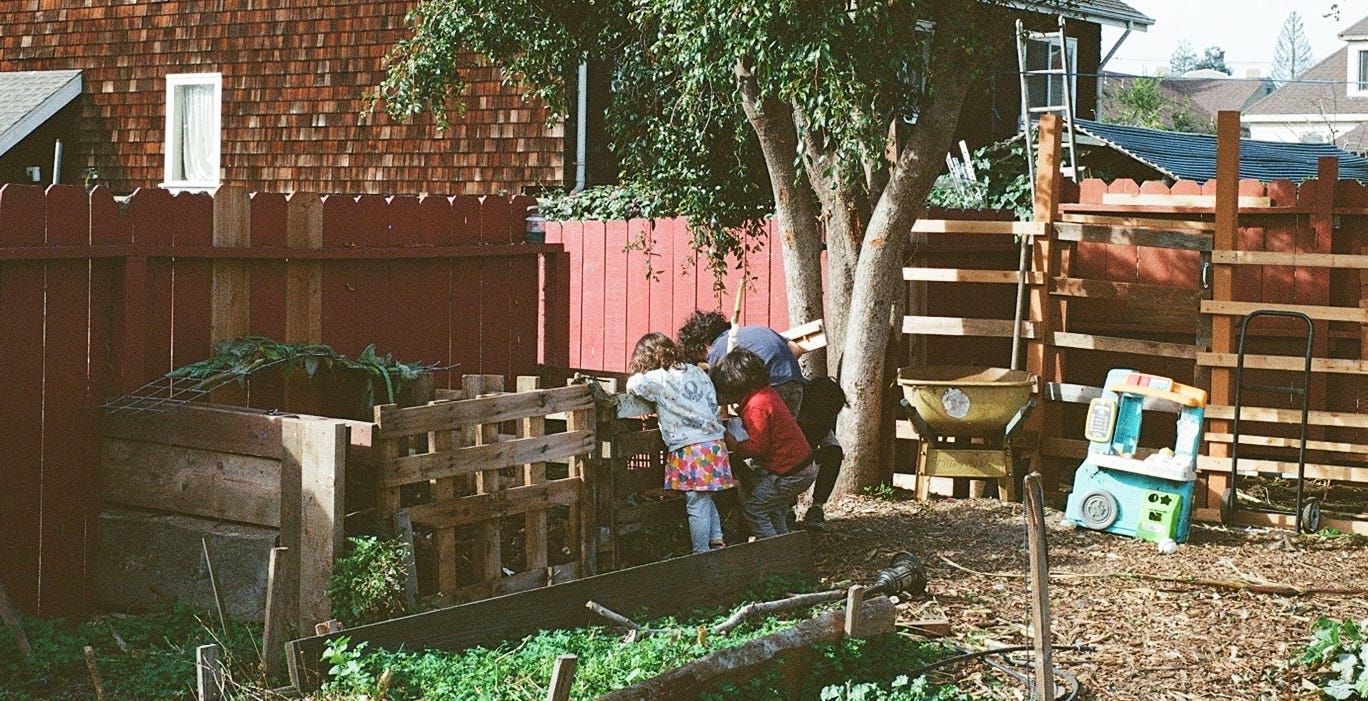
Arriving at a threshold is one task, to embark together is a completely different thing. In mythologies from all over the world, there are guardians that stand at each gate. Egyptian deities requiring a key, a secret name to offer passage to the other side. Perilous crossings like the Naihe Bridge2 are guarded with spirits and snakes teetering over bloody waters where one might make it to the other side for reincarnation.
There is a risk when making way through a threshold together. We might discover that what is life giving is to no longer be growing alongside each other. We might arrive at a gate and find that only one of us has the exact right conditions to cross to the other side. Perhaps it is more convenient to loiter at the edge of a threshing room, then to choose to go in.
What’s difficult about this task is in the riskiness of what’s next. There is a piece in letting go together that is our work, and there is a piece that is up to the divine. We must be both clear and unclear. We must stay with whilst letting go. We must hold what is life giving whilst shucking away the rest. This dance with complexity means refusing our instincts to wrong the entirety of what brings us discomfort learning to reject the pattern without rejecting the person.
The disillusionment of commitments we had once spoke with conviction, reveal to us what they truly were. In each commitment we had named, we are reflected with the reality of our warped consistency to what was genuinely true and had only hoped and longed for yet could not express for our own selves.
If we can enter this process of commitment as: letting go together, staying with all that comes up in the threshing room, we might find a quieter commitment underlying the relationship that is more reflective of the emergent beings we represent as expressions of the land in which we arise from.
dear reader, it takes me so much heart to offer you these essays. your support goes a long way! your one-time support through ko-fi or your subscription allows this work to remain accessible, with images and stories carefully curated for you. thank you <3
Pretty presents versus hardy presence; the work to stay
When I told Angela I was working on a piece about commitment and we started jamming on this idea, I asked them, what does a commitment mean to you? Almost immediately they had their answer on hand. In an hour-long conversation with their close friend David, they landed on a definition they liked: doing the work to want to be there.
The juiciness of this definition for me, is the want. The wanting is like the bridge for relationships. The wanting is the love that reinforces all the spaces in-between the challenge and neediness inherent in relationality. The wanting makes the complex tether of “shoulds” which ropes us into connection by way of expectation and control, tasteless.
To do the work of wanting to be there, when there can mean returning to the places of our most traumatizing experiences, there can be confronting the shameful patterning we’d rather be done with, and there might mean returning to a life that refuses to allow us to distract from our heartbreak, the work of wanting to be there means crossing the threshold and choosing to work with the life that is there.
In 2023, I experienced one of the most painful experiences of my community life. The co-op that I had co-founded in the home I co-owned with my family which I had left hastily due to a body recognition of deep misalignment and a woundedness around my privileges, had obscured our shared finances, stopped contributing to the bills for 8 months, said I had evicted them, and left the home with little to no contact.
Four white men, and one queer white femme bodied person left an energetic taste in my home that I wanted to run from. I felt so embarrassed and full of shame, I wanted to toss this experience into the bin and run.

There is a profound humility in recognizing that what is here, is the work in what’s ours. And there is such importance in discerning that what is here, is not what’s meant for us.
I spent nearly a year in a sort of purgatory wanting to sell the home but not being able to. At the very end of it, I received the opportunity to repair my relationship with the land. To learn to relate with community and the home that could reflect an acceptance of my privileges that neither collapsed or felt entitled to them, but solidly in recognition that this role required me to hold certain responsibilities and offer structure that were only mine to do.
Being given the opportunity to stay didn’t mean I had changed at all from my past self who self-neglected to the point where I gave a group of people who didn’t care for me as their own, the keys to my most intimate places. What it offered, was the opportunity to do the work to heal the woundedness that led to the betrayal, to rewire the parts of myself that asked for the chaos of being directed by the will of others, and the many parts of me that wanted to abandon responsibility while still expecting care in its place.
The route towards reconstitution is a messy one. Just because I could intellectually understand my patterns, and the work of changing them, it would still require a step-by-step process of one regulatory breath during activation, one pause before response, one choice to say no before yes at a time.
And I’ll add this, my commitment to staying with the home was at its core, rooted in a desire to heal at the site of my biggest rupture. I could only know for certain that I had grown the ability to protect myself if I was faced with a similar circumstance to the past and choose something else.
It was a commitment that could not be named because I did not know who or what I was anchoring to. All I could do was feel the impacts of this rupture and move in the direction of wanting to be present to it. In the home that carried memories of disrespect that remained untended, violence that was masked as self-preservation, entitled taking that reverberated from generations of taking cultures of generosity for granted. I had to find within me, the forgiveness and accountability necessary to revisit these spaces.

This wasn’t done alone. It was done with many people, some of whom were hurt by my learning process, some of whom were deeply humbled, some of whom found their own commitments by witnessing my own.
In this process, I originally set out with large grandiose commitments to what would be created, and in seeing how messy my process was and how far I was from those large statements, I began to find solace in the microscopic, the little wins, the spaces within me that expanded when I caught myself enacting harm.
And in some ways, these unspoken and quiet commitments couldn’t be spoken, because they needed the space to become, to reveal, to remain unburdened by my expectations, to release grandiose visions of community, because what’s truer is: the commitment lies in the quality of the work, after the work has been done.
Children, elders, and the land, reveal the empty echoes of loud commitments
When a commitment exists to be known by the other, it wiggles and worms its way into securing trust before arriving at the late summer harvest with the rest of the community.
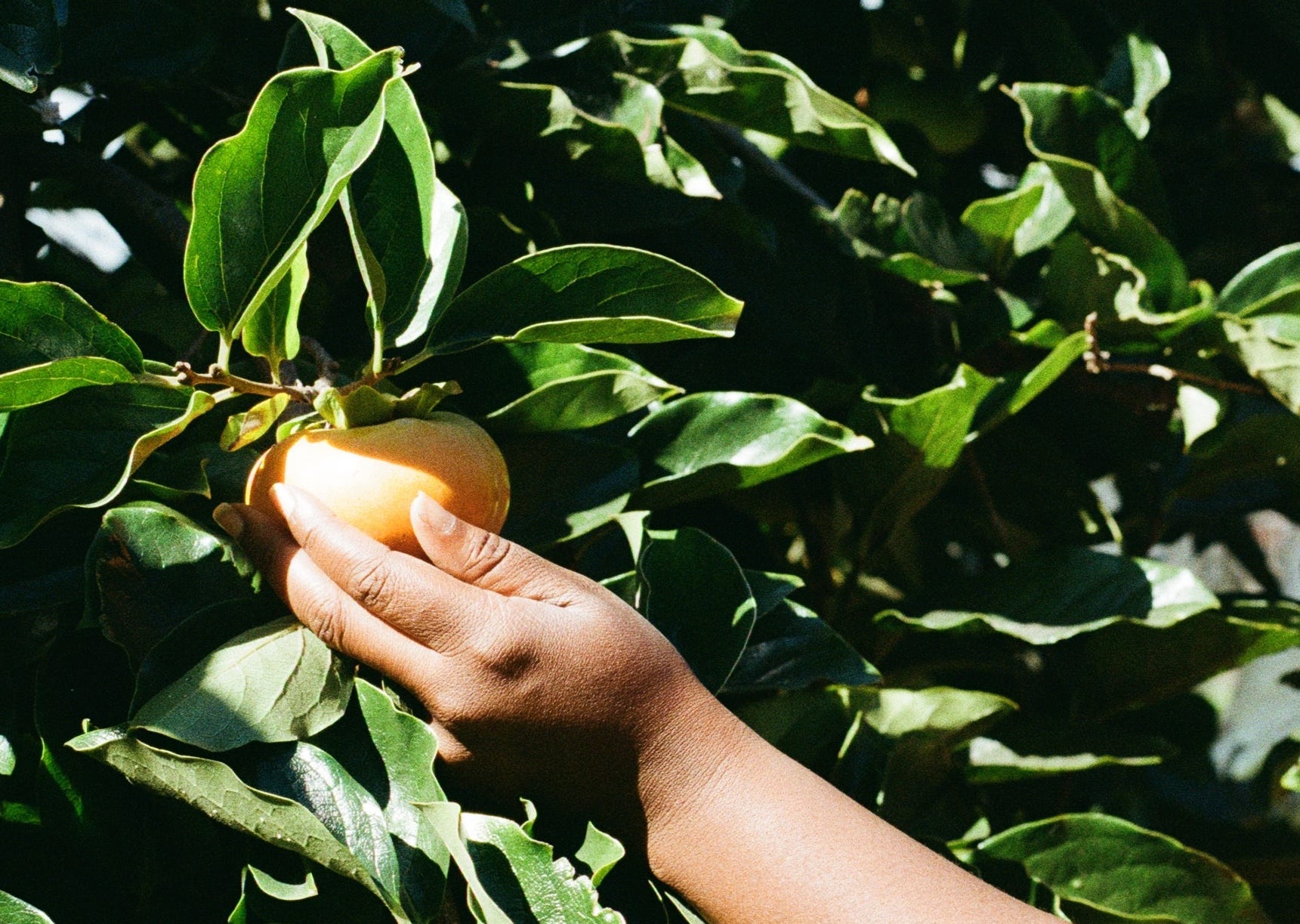
When the rays of the sun have darkened our skin, and we’ve endured a whole season of tending, each ripened fruit becomes a testament to the endurance race, we did side by side. The fruits of our labor expressing themselves in the nourishment they offer, real in the ways they fall to our hands with the slightest encouragement of our receptivity.
Loud commitments, like advertisements claiming AI tech will inspire greater humanity, try like hungry ghosts to captivate our longings and hopes for something deeper, train us to reach towards more resource to solve our rawest, most human challenges.
But it takes almost nothing to express largeness. It requires our whole hearts to find purpose and agency in the smallness of our human finalities.
What children, elders, and land stewardship has taught me, is that our lives have and are supported by those who have committed to caring and being here for us.
When we recognize we have received so much in being alive, the commitment that arises isn’t out of desperation for something to anchor and hold on to, but one of a deeper gravity, a quieter knowing of what it means to have been loved without anything to prove.
When we witness what arises when we sit back and see the opportunity we have to offer back the love two-fold, what is revealed in our unspoken actions, our work to want to be there, where we place our presence without external pressures, is what can be called our quiet commitments.
When we allow quiet commitments to reflect our being there, our love, our truth of how much a relationship means to us, we begin to honor the quiet witnessing that each body requires to be known, the quiet tending that each spirit needs to be renewed, and the quiet devotion that the soul asks for to be able to live into the purpose it has on this beautiful moving planet.

Thank you to Jean Molesky-Poz for sharing this definition with me.
The Naihe bridge lives within Buddhist cosmology as a crossing to get to reincarnation
I love your writing Kylie. Thank you for sharing it 🤎
Woah she's so back