


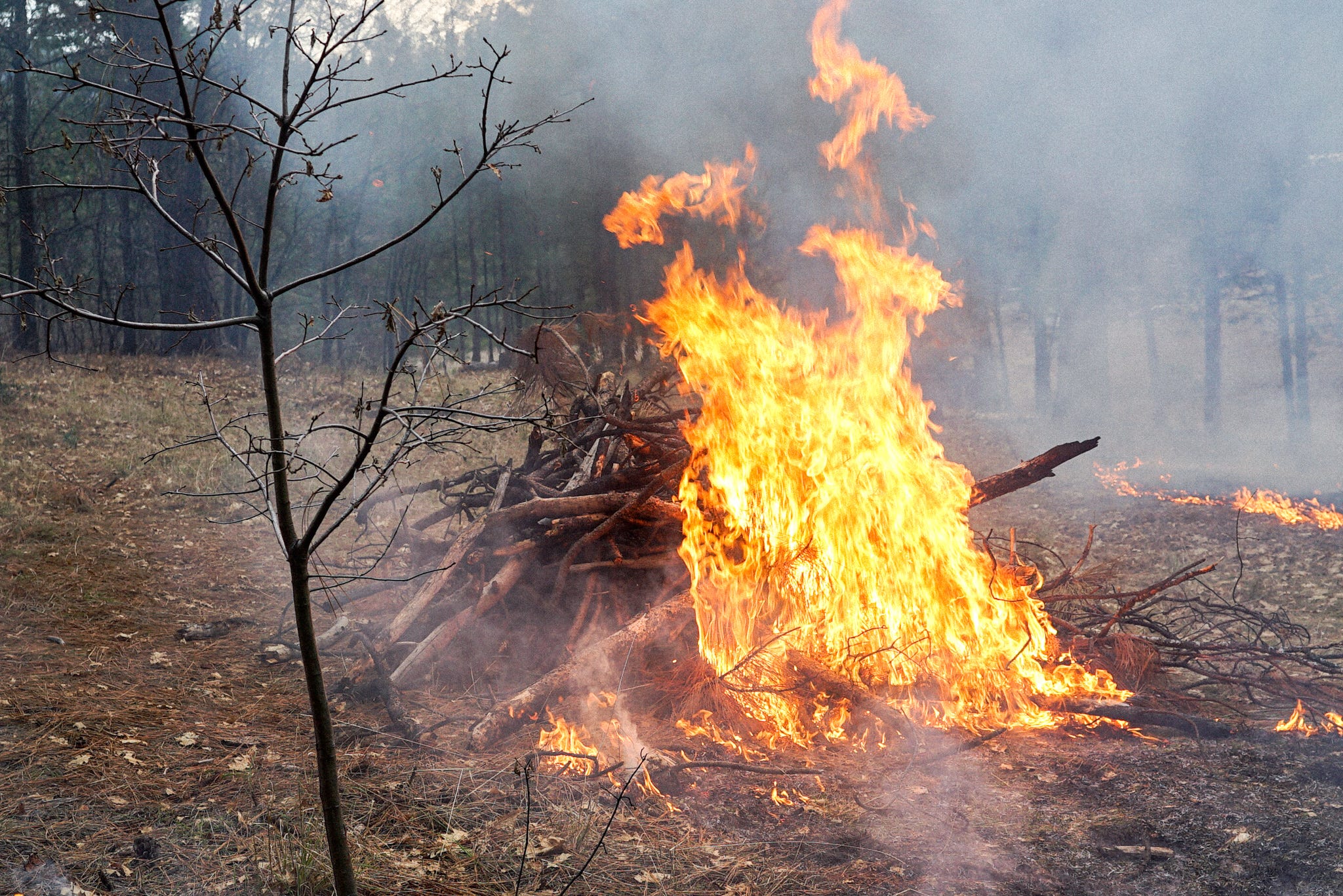
The wu xing, 五行, known in the west as the five elements reminds of the cyclical way transformation occurs. For life to continue, it shares with us a process, a turn of the wheel, one state of being that leads to another.
The cycle starts as wood, the plant life that bursts through the earth to create fuel, food, the cellular body of the land. When that wood dries, dies, and breaks off, it is transmuted by fire, which needs this source to burn, incinerate, carbonize into the gifts of heat and light. The residue released by this action, gathers, accumulates, and adds to the layers of processed life, sediment, soil, creating the basis of the grounds, the mountains, the foundations. And as each layer of earth builds, these particles pressurize, crystalize, and liquidize into ore, metals, minerals, that can be shaped, melded, and welded into beauty. When the metal releases form, softens, loosens, water emerges, springing out from the ground, falling from the sky. Wetting the land for growth once again of wood.
When I sink into the lessons of these cycles, elements, phases, and seasons of nature and time, I recognize the requirement for new vocabulary that can describe relationships with enough spaciousness to be with the transformative changes all living beings undertake.
In our current reality of naming and labeling relationships, there is little room for change, and we brace ourselves for the friction that undergoing transformation means. When we know that change is on its way, we cannot help but splinter off or hold on with an iron grip, breaking off partnership or stagnating into set roles. Unable to see the opportunity to be in a practice of partnership that recognizes what we most need during transformational moments is to be witnessed in relationship.
This is why, recognizing partnership as a state of being in relationship, as a verb, an action, a modality of practice, rather than as a static label, grows our capacity for more complexity to support us in our relational fields.
The domination of nuclear family coupledom makes our relational fields small. It privatizes, hoards, draws lines in the sand, ostracizes, excludes, isolates, and freezes people. People who hold the wisdom of our ancestral remembrances, people who are trying to overcome trauma inherited from oppressive dynamics, people who are in… their process of transformation.
We have such a tiny reservoir of forgiveness when we find our safety within a small unit of one other. It only makes sense to me that in a culture that uplifts partnership as the ultimate strategy for getting most of our needs met, the emphasis is on finding the “right” partner, rather than increasing our ability to be in partnership with the world and each other.
But that’s why Relationship Ecology exists. We can take on a different perspective on relationships, one that understands the necessity of returning to our humanity’s birthright of the village. Relationship Ecology asks us to seek out belonging within larger and larger nets of relations. In this work, we begin to realize that the issue isn’t just with who we’re in relationship with, but how we are relating to intimacy and showing up to our relationships as active partners.
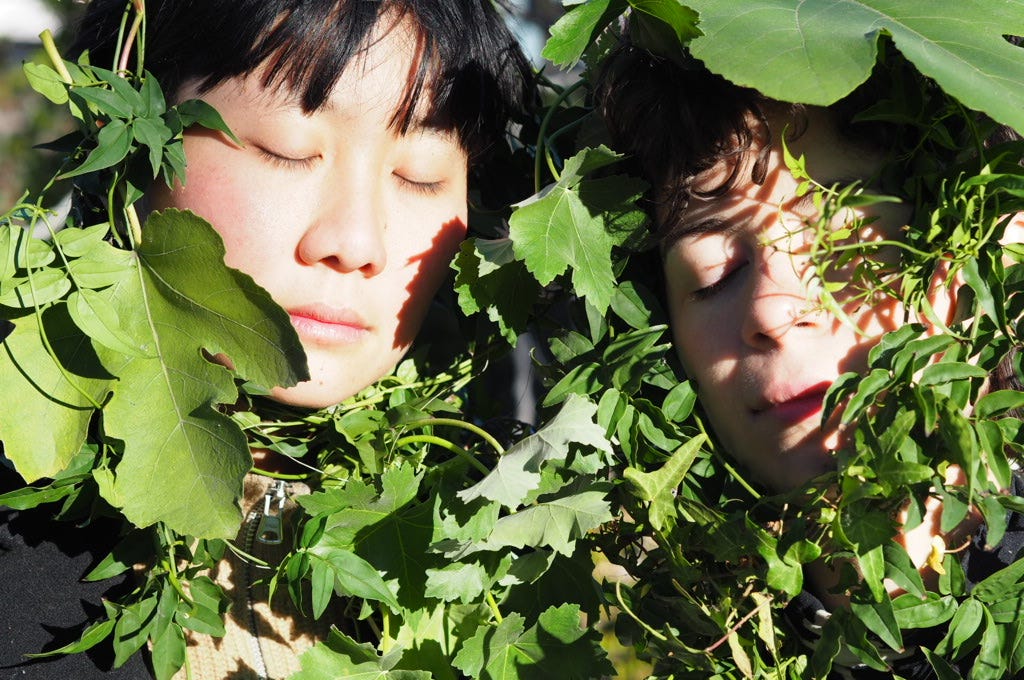
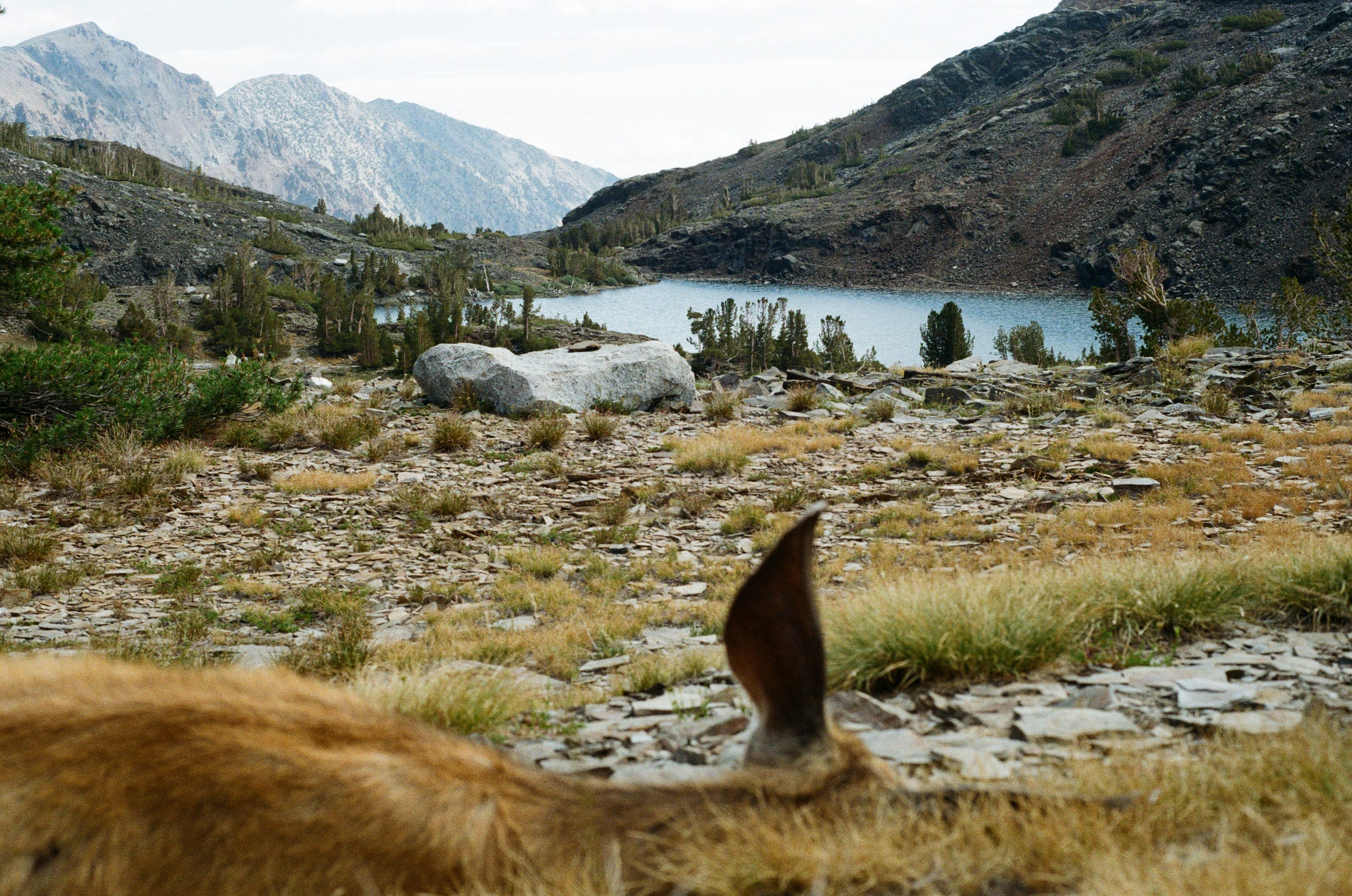
me and oona, shot by Camilla
Seeing people outside of romantic pairing as fields to practice partnership is, inherently divergent from the norm. Many of our relationships in modernity are either romantic partners, power-over/under relationships, or parentified relations. This dynamic lives not just in our human peer relationships. In our relations with animals, children, the land, our plant relatives, and objects in our lives, we rarely practice partnership. We choose more often than not to dominate and subjugate those we feel we can control with our will power.
Partnership requires a whole lot of different skills. It is a relational practice of meeting the other in mutual wholeness. It is more than closeness. It is showing up in recognition of the mystery of the other, recognizing that to co-hold, collaborate, and mutually care for one another there must be a willingness to change and transform oneself in a dynamic call and response with those we partner with.
To actively be in partnership is a moment-to-moment commitment, of staying with what arises within the relationship, and allowing it to move us. When we see partnership as an active state of being, we recognize that the commitment is to presence, being with the changes rather than the illusion of partner as a role we’re looking to for fulfilment.
What partnership requires is commitment. When the commitment is to a person, we can easily feel afraid and angry when that person changes. If the commitment is to the spirit of relating, a surrendering to the power of partnership to change and transform us, we can begin to touch upon a trust in life that recognizes what’s yours is mine, and what’s mine is yours, is not a burden… but a freedom in seeing clearly the nature of life.

Commitment not as forever, but as nature commits to integrating and being moved
What exactly is commitment? In this over-culture we create binding agreements through complex documents that hold the power to instigate law, legislation, legality, through the carceral state. Without much consent, we have given ourselves to the protection of governmental systems that are still colonizing, torturing, and oppressing people with violence.
Commitment in domination cultures requires a punitive punishing body to enforce itself. In this form of commitment, we might meet our needs for safety and security, but our needs for connection, love, and reciprocity are severed.
It might require a whole lifetime to unlearn commitment as a form of shackling, tying down, and trapping. These words are used to describe the commitment of marriage, the commitment of work, the commitment of parenthood.
What we are conditioned to believe, is that commitment is a burden, weighing our aliveness down, forcing us to be in subservience to the will power of others. Commitment can look sacrificial, self-abandoning, and forced. When we are disconnected from the commitment of nature, we are vulnerable to the scarcity fueled capitalist system that reinforces a fear that makes trusting the state easier than trusting our human kin.
It is in light of this reality, where the action of partnership, can guide us towards a devotional commitment to the pathway of interdependence, family beyond blood, and village life. Like the morning star, this kind of commitment is like a bright steady presence coaxing us into possibilities of beyond.
A few years ago, our late elder in community, Uncle Bob shared with me stories of Anpao Wichahpi1, also known as Venus or the morning star. I remember him describe her as a goddess, one that without fail in the darkest of nights showed up in presence. She was the first star visible in the night sky, and the last one left shining.
It was a surprise to me to find out that after Bob had passed, he had gifted me the name of Anpao Wichahpi. In a period of my life where I had little stability, was in deep emotional and physical pain, I would wake up each winter morning and pray to Anpao Wichahpi. I would practice morning qigong I learned in China and focus my gaze on her as the sun slowly rose and she would gracefully fade into obscurity.
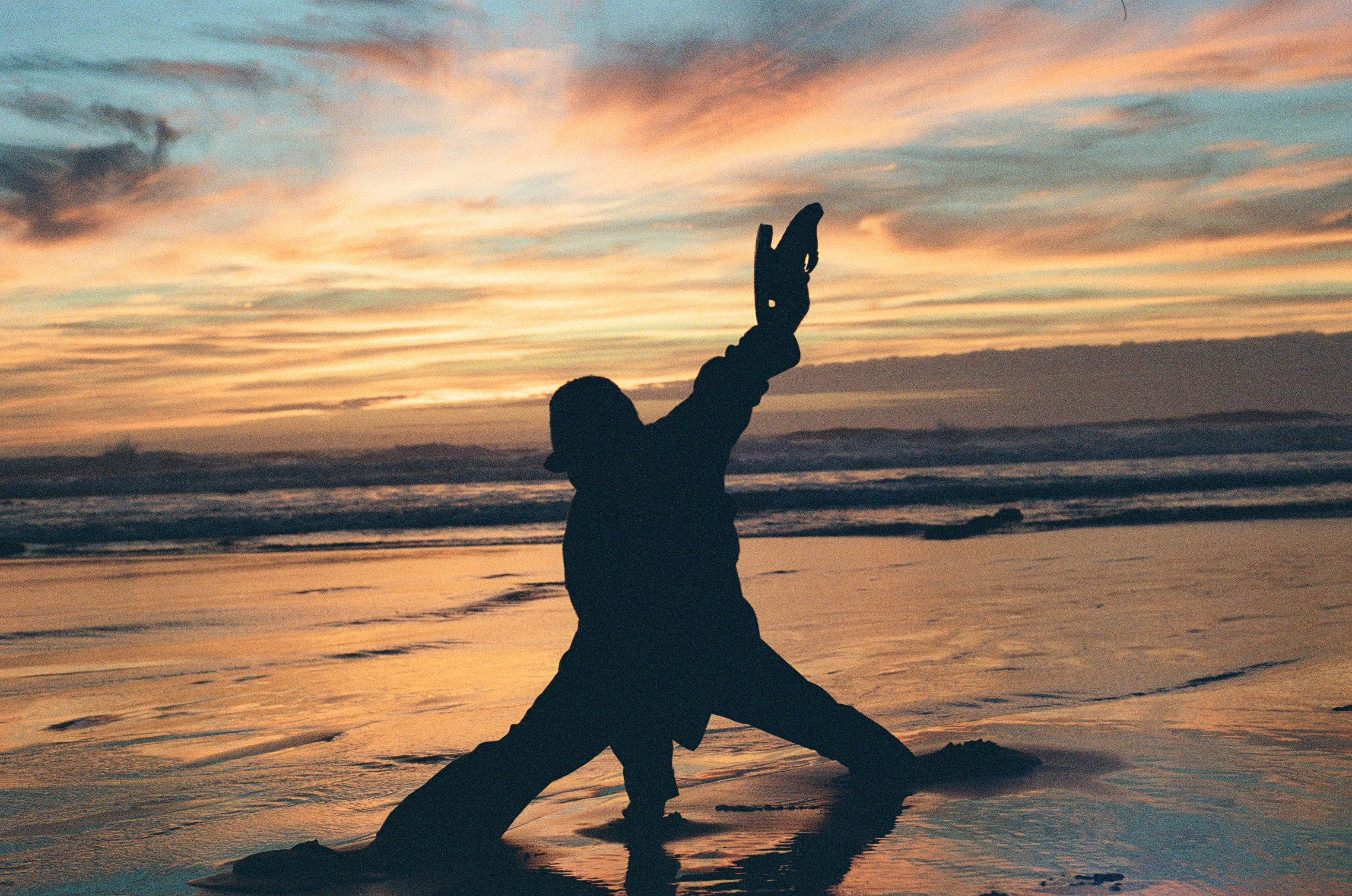
There is something anchoring to me about the steadfastness of the nature beings we’re surrounded by. The mountains that always turn green after the rains, Anpao Wichahpi brightening as the darkness grows, the waning and waxing of the moon, the birds and their flight patterns. They are cyclical patterns, ones that are unique to each nature being, one’s that are integral to the possibility of each moment. The full moon gives way to the new moon, and all the phases in between.
It is in recognizing our phases where we become whole. It is in offering these phases to partnership, where we invite in the magic of integration and the potent medicine of being moved.
Each morning that I showed up in reverence to Anpao Wichahpi, I slowly became changed by my relationship with her. My awareness of the elongations of the days heightened, and I became attuned to the sky in a way I never expected. I found myself deepening in my prayer practice, and my ability to be still and receptive to a quieter world. I came open, consistent, and with curiosity, and I was met with the gift of becoming a piece of who I was giving myself to.
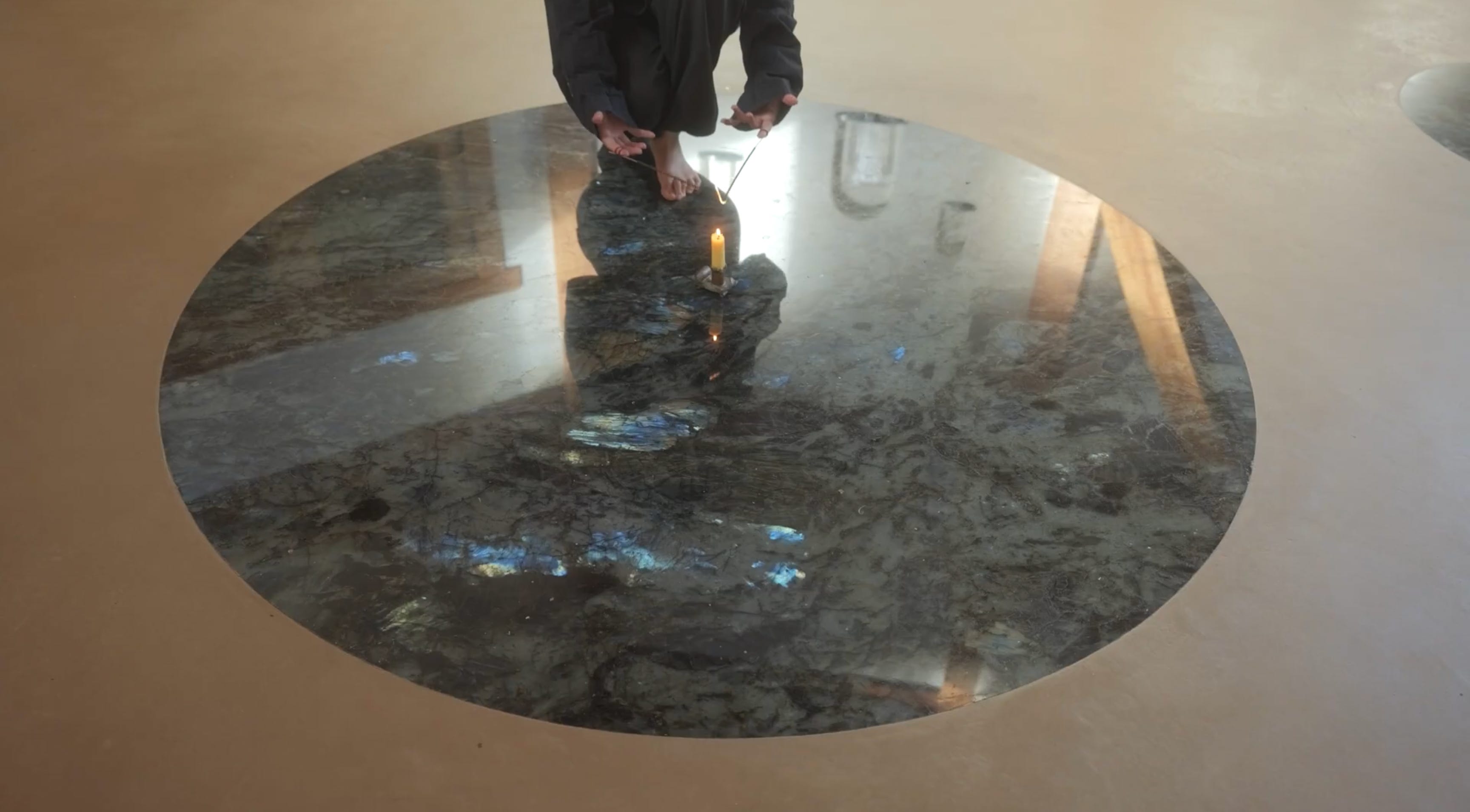
Partnership as a world building practice
Being in partnership with beings outside of human and romantic ones has completely transformed my core. There is something about romantic partnership that easily divulges into the dynamic of the other as a resource, one to syphon off when we are hungry, tired, or in need.
Yet the distinction between resource versus partner, has to do with whether we are seeking someone or some being to fill a particular role we’ve created, or instead if we are actively responding as partners, curious and open to being shaped by the other.
When we see the other as a resource to meet our needs or fill in a role, we don’t see their needs as relevant to our decision making. We only extract what we want and need, sometimes giving back, but not necessarily giving ourselves to the change that the other is undergoing.
What would it look like to give ourselves to listening to what we see as the “resource” of the rivers, the lakes, the forests? If we were truly to listen, to genuinely partner, to give ourselves to the requests of these beings, we might realize we cannot with integrity access what we’ve enjoyed before, in the face of recognizing our impact on the other. It is preventing ourselves from feeling the fear of losing what we have had, where we close ourselves off to the opportunity of being changed in ways that open us up to worlds we might never have imagined.
When I was 22 years old, I made a commitment to my cat companion August. I spoke to her, expressing my deep regret for the ways I’d been treating her for much of her life up until that point. I wasn’t treating her as a partner, but rather treating her like a pet. My needs, my whims, my control were dictating her life, and I saw the way that it was causing rupture in our relationship.
I had to ask myself, what would it take to truly partner with August? To be moved by her needs, to humble myself in recognition of our interlocked livelihoods that would no longer prioritize my desires over hers. But rather to ask, in what ways can I allow the emergence of her life be a guide for me in mine?

Over the years she has guided me down a path where I have had to make hard decisions to integrate her needs. To slow down, to consider the options, to see her steadfastness as limitations that support me to question whether my at-whim-desires are coming from a place of childhood fear or alignment.
When I committed myself to partnering with August, with my parents, with my home, with the land communities I went to, and with creative collaborators, I began to recognize the potential for partnership as a world building possibility that can carve out an entirely new entity rooted in interdependent living.
Isolation defaults to the structures and safety nets that capitalism provides. Isolation gives us the illusion that we have control over our destiny. Isolation feels safe because it allows us to remain within our story of what is real, true, and possible.
Rather, partnering exposes us, enculturating us to another reality, where we are confronted by perspectives that shake our notion of our singular sense of the world. If we inherently believe that our freedom relies on our autonomy and agency of choice, partnering is only a burden.
If we believe in the inevitable integration, insemination, and infection of all living beings in dynamic dance with itself, leaning into partnership is a form of understanding ourselves through the reflective gaze of another. It is being in practice with perspectives across difference, and seeing the gift of having more minds to construct the whole.
Although control provides a pathway through uncertainty, its frigid rigidity, crumbles in the face of change, and the pressures of emergence. Control, within a capitalist regime, can get far fast, but in chaos, control resorts to domineering others.
Rather, uncertainty is only all of life. And true partnership is the ultimate practice in uncertainty. Only time can tell, if someone can show up w-holy as a partner. If they can commit to being changed by what is exposed within the dance of partnership and return with an impression of the other’s fingerprint, deepened by the touch of another’s broken heart.
Octavia Butler reminds us: “All that you touch you change, all that you change changes you, the only lasting truth is change.”
I oftentimes think of partnership as the temple in which I get changed by. That there are people in my life who demand me to look deeply inside. Not in a confrontational or accusatory way. But in the ways that they love me, so fiercely, that they get frustrated with me, triggered by me, and brought to their knees by our relationship. It’s because relationships that require commitment as a baseline recognition of the immense offering that being kin provides, are the kinds of relationships required to transcend systems that are separating families, building caste systems, and destroying the places that feed all of life.
If we are unable to learn how to trust one another, support one another, communicate with one another, how do we expect to fight with love in the face of the destruction of our mother, the earth?
All I know is that I hope to partner with so much of life. I want to partner with the mothers and fathers, to the babies and the little ox boys2, I want to partner with the ocean and the rains, to the rivers, the large oak amidst concrete. I want to partner with what is here in front of me, what is here all around me, what is quiet and sensual below me.
I want to partner with uncertainty, mystery, and with spirit. I want to learn to be a partner more than I want to be in a singular stable partnership. I want to live and know I can show up as a partner wherever I find myself, so I may find security within myself to confront the difficulties, changes, and chaos of these times with the trust that by giving myself to showing up in commitment, I may become a reflection of all that feeds and nourishes my life.
Thank you for reading, this writing takes a substantial lift, and I try my best to offer original photos and art for my pieces. If you feel called to support and become a paid subscriber, here is the link!
Lakota for Morning Star.
I refer here to the animal in Chinese astrology that describes one’s yin fate. In this case, two boys in community that are Ox’s.

This really resonated with me. My long term partner and I are currently navigating large shifts in what it means to be partners beyond the romantic sense and how we can continue to partner when the narrow definitions of coupling and partnership now longer fit us.
I’m with you.