


In California, where I live, 95% of old growth redwoods have been cut down since European colonization of these lands. When I walk through the second/third growth of these forests, it seems hardly imaginable the time scale it takes to be old growth. The ways their descendants continue to grow in these forests, are shaped by the clear cutting and the ancient ways of their ancestors.
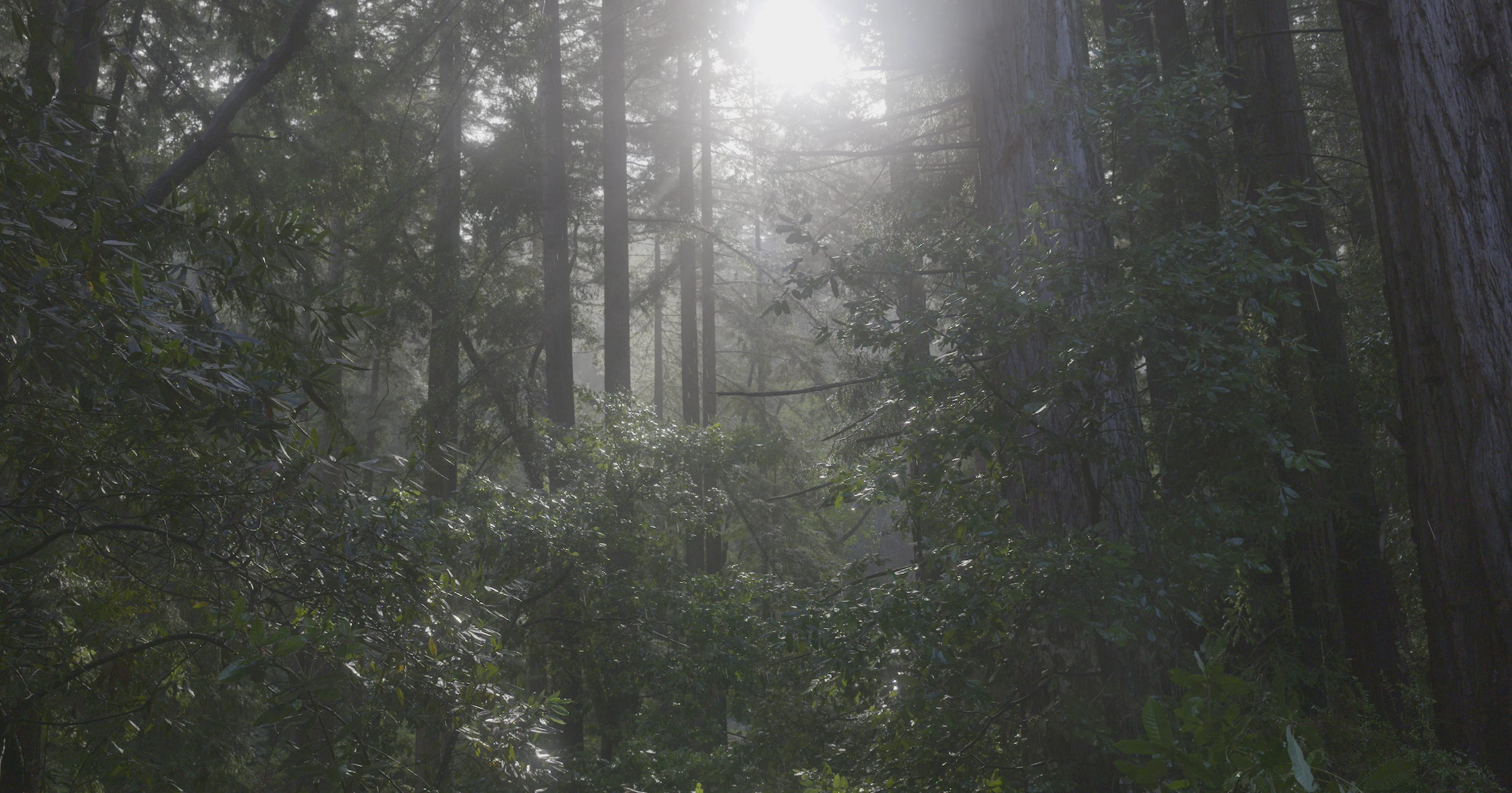
The second/third growth forests in this region speak to me of the realities of this lifetime. Growing up in this time of great turning1 I might never taste the ancient and new way of relating to each other, yet it doesn’t mean I can’t still be participating in the way-making of those pathways.
This blog is an altar in devotion to the gods of relationship. Seeing the possibilities and potentialities of relational work to aid in healing ancestral pain, and the interpersonal–systemic2 conflicts of the world. Relationship work is not the only avenue to cultivate change in the world, but it is one of them, and a potent one at that. Our relations shape our reality, and if we want to participate in the doula-ship of a new world, we can harness our relational change to transform our day to day lives, in turn impacting the ecologies all around us.
Relationship Ecology is more than a cute way to connect nature to our relational webs. It is a direct response to the earth calling for a relational rehaul, a recognition of her hurt, an invitation to face our shadows. And what has become clearer to me overtime, is the recognition that expanding our notion of shared risk and inviting relationship to take this on with us, is like learning to prescribe fire to our forests in need of a clearing.
Taking on shared risk with relations is growing our skillset to navigate crisis. It is working out our muscles so when we arrive at uncertainty, we know what to do. When we have tools to tend, repair, collaborate, and reconstruct3, we house within ourselves the future world we are breathing into being.
When looking at a nation that is actively harming its own kin, we must have the courage to look at the parts of ourselves that take to strategies of dehumanization, control, and oppression when scared.
“What you’ve got to remember is what you’re looking at is also you. Everyone you’re looking at is also you. You could be that person. You could be that monster, you could be that cop. And you have to decide, in yourself, not to be,” –James Baldwin.
What this post is talking about, is the path towards planetary healing that requires our inner work and interpersonal work. And only when we take on shared risk, can we begin to confront, see, and integrate our shadows, our monsters, our inner cops.
Relationships solely founded on feelings, give us the illusion of wellness. But when we recognize them as reflections on a water surface, wavering and dissipating when the water roughens, we might find our way to the hard-earned place of relationships that vulnerability, trust, and conflict construct.
Being human once meant kinship, interbeing with a fabric we knew ourselves to be a part of. Knowing that our backs were protected by relations ready to defend, able to make amends, and welcome us back with ceremony. To enter the level of depth that these relationships of kinship offer, we must be willing to take on shared risk. Shared risk is the practice space, the arena of discovery, the place where wounding will take place but is also the gateway to thresholds of intimacy: where descending deepens our belonging, safety, comfort, creativity, autonomy, and play… with the world around us.
Shared risk, a dangerous opportunity
I have gotten a lot from integrating the term shared risk into my relational vocabulary. When I gather up all the ways shared risk is present in my relationships, I can understand the depth we are swimming in. Sometimes, we dive too deep without the proper equipment, or the practice of holding our breath. Sometimes, we explore the depths and learn the depth we can navigate, and the pacing of descent possible.
Many of us seek out relationships thinking they can be anchors of safety for us. We might gravitate towards people who promise us a possibility of what we want in our lives. This is not something to feel shame about, it is simply our souls seeking out healing and wholeness through relating with the other.4
When we can recognize that our yearnings for creating home, building a co-created life, collaborating on vision together, eroticism, are very much ways to meet our needs for safety, belonging, and connection, we can release the other as the key to these goals. Rather, these longings provide for us, valuable practice spaces where we may journey down into the thresholds of intimacy, enlivening the warrior of love we house within us.
Gil Gomes Lead says, “safe spaces do not exist. Safe spaces are controlled spaces. There’s always an element of risk.” It is this element of risk that is ever present in relationship and is the white rabbit leading us into the dark unknown of these thresholds of intimacy.
What feels to me to be the biggest distinction between our human constructed reality and nature, is our relationship to control. In nature, nothing is controlled, everything flows in an embodied response to all that is around us, constantly creating impacts that lead to the next. In our human constructed cities and sites of conflict, we enact our will over each other and the environment, breeding safety in a type of certainty that can never be met.
I often hear in community this concept of crisis5 from the Chinese phrase 危机 weiji. In Chinese, characters don’t usually appear on their own. It is in pairing where their meaning is made. 危 wei when paired with 险 xian, is 危险weixian dangerous, and 机 ji when paired with 会 hui, is 机会 jihui meaning opportunity.
It is within crisis that there is both the possibilities of danger and opportunity, depending on what partnering of characters is available. It is within crisis where who and how we partner determines a collapse into danger or a rising to the opportunity at hand.
What Relationship Ecology aspires to is regaining our reverence for shared risk. Here, the distinction is in the word shared. We often take risks in relationship. Whether that looks like sharing vulnerably from our heart, our longing, our desires, or even our traumas,6 taking the step to sharing the risk, requires a whole lot of work, reverence, humility, and practice.
Taking on shared risk is not an endeavor for the light of heart. Stepping into shared risk means challenging our very notion of safety as constructed by the capitalist regimes at large. It requires a descent into the unknown, an odyssey into dangerous territory that has the potential to hurt us so bad that we are burnt to ashes, only able to rise again as a phoenix with a defiant heart choosing to love again after death.
To heal one’s wounds, to reveal one’s scar tissue, and yet to return to love is the passkey for descension through these thresholds of intimacy.
In this blog post, we’ll be exploring together four thresholds of intimacy. There is so much more I want to share on this topic, like the complexity of giving and receiving within these arenas when enculturated by capitalist exchange culture, but the focus of this post is to invite us into looking at our relationships through the lens of shared risk, rather than feeling.
It is easy to feel a sense of closeness when things always feel light and easeful. Yet if we haven’t taken on shared risk and conflict, that closeness can easily dissipate. These thresholds are places where we reinforce relationship through navigating uncertainty, and choosing again and again, to show up, naked to love.
So, are you ready to descend into exploring these thresholds?
The thresholds of belonging through shared community
Each one of us living in modernity has a belonging wound. From the beginning of our lives, we have been oriented to a culture of competition, scarcity, and extraction. We have been enculturated to see our value in exceling, dominating, controlling, and putting others down. This is how the US treats countries with little power and agency, bullying them in giving away their access to water, land, their languages, their cultural ways.
It is this domination of indigenous lifeways within this country and in lands all over the world, where we have misinterpreted belonging as privatization. If we have ownership, we feel we belong. Yet if those who have access to most of the world’s resources truly felt belonging, would they continue to be hungry for more?
When we belong, we know we matter. We know that our decisions, our relationships, our transformations, our dreams, our livelihoods matter to the people around us. We know that support is there when we seek it, we know that regardless of what we do, there are people rooting for us, praying for us, thinking of us.
To create communities that have this level of fortification; to hold us in our belonging, we must wade into deeper territory. The barista at our local café we see each day, may provide us familiarity, comfort, and connection, but they are not going to reinforce our belonging within a wider web.
What is required for deepening our threshold of intimacy through shared community, is to take on the risk of weaving a web of interconnected community. One where the layers of connection and nodes of knowing each other buoy us into a messy relationality that doesn’t allow for anyone to sever without impacting the whole.
We entangle, knowing that when conflict arises, our relations will keep us enfolded in the dynamic, and our shared community becomes the container that reinforces our return to relationship. When we return to relationships, changed, and ready for repair, our sense of belonging grows, enforcing our self-trust in our capacities to withstand the necessary rite-of-passage that conflict presents.
I have often heard people saying, “I will never date anyone in community,” while I often say, “I will only date someone in community.” For me, I see the power of communing intimately with someone who is beholden to relations I am beholden to. I recognize that the belonging I seek returns me to belonging to the whole.
What we’ve been so deprived of is a knowing that we are integral to this fabric of life, that the village remembers us, that our kin want to welcome us home. When we grow shared community, when our friends know our families, when our partners are friends with our roommates, when the children see our friends as aunties, when we date our friends’ best friend, we are called into reverence, slowness, recognition of w(holy) matrimony.
It is a threshold that requires us to step into discernment, integrity, and walking with purpose. It is quicker, faster, cleaner, and less risky to build relations of shared interest that don’t overlap. When we interweave, the risk of pain, discomfort, and our deepest belonging wounds heighten. The beast of unbelonging we had thought we had tamed in our presentable boxes of identity, lurches into action.
A shared community constructs foundations of intertwined root systems. These root systems know when to transport medicine to the places calling for help,7 and when we slowly grow trust through weaving our nets of relations, we can call upon this support to remind us that we matter. In mattering, and being reminded of this, we may heal.
The thresholds of safety and comfort through living together
There will be a day where I will write a much longer thorough piece on this threshold. Living together is extremely complex. And the way I see living together, is in sharing the material risk of taking on a home, car, food, livelihood costs with those I’m living with. Living together has many thresholds beyond just sharing space together.
Sharing space is one threshold, another is financial intimacy8, and another is cultivating systems of support within our households that allow people to emergently change their needs whilst retaining closeness to the home. An example of this, is within the traditional models of renter/owner, if someone wants to leave on a long trip, they usually are responsible for finding a subletter to take on their room when they are away.
However, if a group sharing a home wants to take on supporting this transition, knowing that whoever lives in the home will impact those in the home the most, they won’t see this decision as a responsibility of the person leaving, but rather as something to take on for the entirety of the household. Both in inviting in someone who can grow and benefit from the space, and in allowing the person who’s leaving to be held in mutual support, creating a culture that reinforces belonging.
When we live together, our capacities for rest, comfort, and safety, rely heavily on the cultivated holding of the household. When we think back to our homes of origin, many of us didn’t feel a sense of safety or comfort in our home spaces. It is in this threshold where we can push on the edges of what creates this safety and comfort. Is it our ability to shape the home space itself? Or is it the relational fluidity between the people in the home?
There are infinite ways to experiment, and multiple dimensions of learning ourselves through the process of living with others. I often feel like this work is a portal, an opening into thresholds of intimacy beyond living together. And it is a good place to begin.
The thresholds of creativity and autonomy through collaborating on Vision
If you’ve made it this far, I have no doubts that within you is the harboring of Vision. Vision with a capital V, is what our world is constructed from. The Vision of those who believe food is medicine, each being is sacred, that lives should not be unjustly taken, that the earth is a living breathing being, these Visions fight the nightmares of limited beliefs of a scarcity minded, take-all approach that believes one lifetime is all there is.
When we connect to Vision, we are situating ourselves as the w(holy) inheritors of both the earth and the heavens. We give ourselves to purpose, to life outside our own, to transmuting the traumas for a future we can give to our grandchildren.
It is in these Visionary realms where we can exercise creativity and passion, we connect with those who long to transform our schools, our workplaces, our food systems, our governing bodies. It is also a place for collaboration, bringing together community… and conflict.
We might share radical Visions of village with our loved ones, but the route to this place together may be rocky. To name the number of failed projects I’ve undertaken to collaborate on Vision, would be embarrassing to name, but there’s likely been dozens of iterations of falling apart, disintegration, or outright severance of relationship.
Perhaps what I can offer from my own failures, is the invitation to center how the Vision lives within your own life. How it expands or shrinks depending on the collaboration, or the roles we take on within collaboration. Does it lead towards movement, flow, synchronicity? Or does it stagnate, lie dormant, feel oppressed by the collaboration?
When we can move together in Vision whilst remaining creative and autonomous, we deepen in our trust of the universal law of right place, and right timing.
To enter the threshold of collaborating on Vision, is a practice of self-intimacy, of cultivating relationships that allow us to be seen and heard in our expressions of creativity and autonomy. Allowing the relationship itself to be the Vision, is to release the goal and center the relationship when conflict emerges. Slowing down when things are not working and tending to the heart of things, seeds the soil for creative expression and the autonomy of when a group of souls are called to do their work in service of its piece within the collective Vision.
It is a risky endeavor, to invite in collaboration of Vision. But it is a threshold of intimacy that houses the important practice of staying centered in what you are uniquely here to do, while recognizing one’s work is always in connection to the service of a larger interconnected ecosystem.
The threshold of play through sexual and erotic intimacy
When I was younger, sexual intimacy was deeply rooted in a desire for validation, connection, and being wanted. It was an arena in my life where I exercised manipulative tactics to manifest experiences that confirmed my desirability and gave me peak moments of being seen.
After many years of sexual experimentation, what I have been reckoning with is that deep emotional vulnerability often uses sexuality as a mask. That to reveal one’s sexual self, is to make seen our childhood wounding, our relationship to being loved, and the strategies we use to prevent ourselves from abandonment.
It is in this reframe where I have begun to tread much more tenderly in the arena of sexual and erotic intimacy, and veer on the edges of eco-sexuality and community eros. These are two concepts I hope to share in future times, as I am still in-process of verbalizing them.
What is becoming clearer for me, is the importance of decentering sexuality as pure penetrative, hetero-normative sex. Sexuality and eros is the pleasure in light streaming through the windows illuminating the magical dust particles dancing in the atmosphere. It is the channel that runs through the top of my head down the passageway at the base of my yoni, energizing me with the guidance of the heavens and the holding of the earth.
It is pure play, childish wonder, inhibition of sound, movement, and tears.
To invite another into this form of intimacy, is different than practicing the rote memorization of porn-infused-sex-as-we-know-it. It is an invitation asking to be understood, seen, revered as sacred, coming to the temple, as offering, as god and goddess wrapped by a fleshy, vulnerable membrane powered by a beating heart.
When recognized in this way, the risk of sexuality and erotic intimacy, is in the reveling of our wholeness at every moment of the day. Sexuality and eroticism don’t begin when we take off our clothes, it begins when we accept the nakedness of being true to our senses, of following the whiffs of inspiration, the feelings our bodies need to release.
This in concert with another, is a risky endeavor. When shared as a risk, can redefine our love for ourselves and the erotic spirit flowing through the life force around us.
An ending, for now, a question of what you intend to risk
I’ll admit, this is a chunky blog post. After Partner as a State of Being received such a huge outpouring of love and recognition, I knew that I needed to follow it up with this post on the thresholds of intimacy, and taking on shared risk.
I feel so much grief with the world daily. Sometimes it feels utterly crippling, the internal pain I experience, in recognition of the deep disconnection we have to the village, to our bodies, to each other, to the land.
Relationship Ecology is how I cope, how I make sense of change-making in a micro way, in a relational way. We were once wounded in relationship, in this life and in the echoes of the ancestors we come from, we were betrayed, put down, ostracized, cast out, and demonized. It is in relationship that we must find ways to hold these hurt selves and be sung to by relations of kinship.
I sometimes wonder, if the second or third growth forests know that they are carrying the grief of total decimation of their ancestors. I wonder, what inspires them to still grow, to call out to us and ask us humans to participate in their tending.
I wonder, if we can learn to see ourselves as these forests. Rising from ruination, in recognition of being an in-between species, tasked with an inheritance that was never ours to choose, yet has become our destiny to learn to hold.
When we take on risk with others, we walk ourselves into a dangerous opportunity. The outcome will never be what we planned for, but isn’t this life meant to be for living? Does it have to concretely amount to a permanent structure to have meaning? Or can we be satisfied with the living itself, the humbling of walking our beasts’ home, the knowing that our growth reverberates past our own lives into the breath of the children we’ll never see grow old.
For the thresholds of intimacy go deeper than we’ll ever be witness to. As we bring light to the descent into these thresholds, we carve our names into the stone, encouraging others to know that others have healed from wounds so painful like our own.
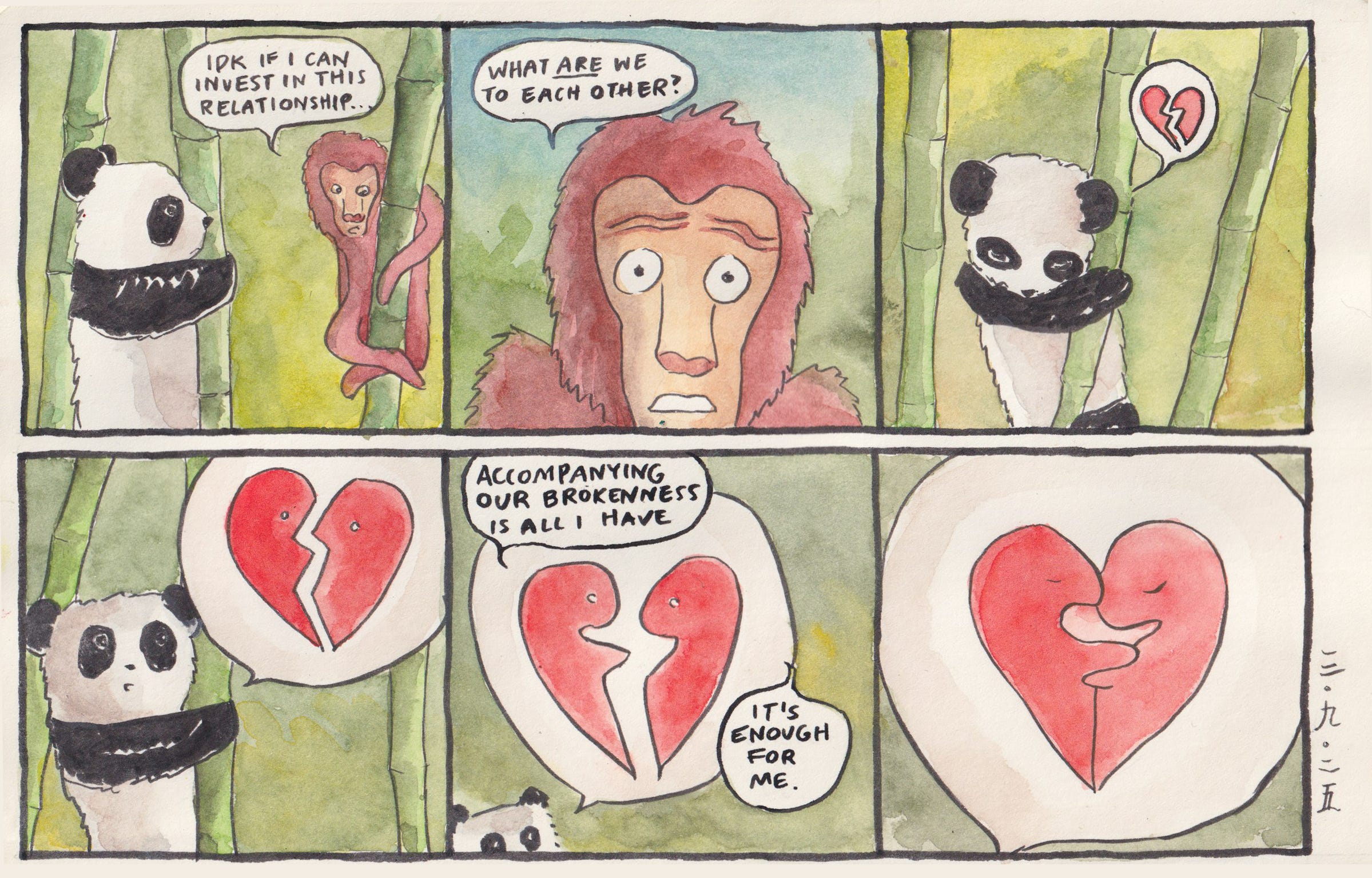
Are you willing to take on a risk with another? To grasp the hand of the unknown and a companion. To descend together, to risk, belonging to more and more of this world, and this beautiful unraveling.

I learned this term through community, describing a time of collapse, turning of the guard, and emergence of a new world. Joanna Macy popularized this term, and resonates in many Indigenous Prophecies of the unification of tribal people.
The interpersonal is the systemic. This is a concept I have learnt through the world of restorative justice. When we begin to look at divides for example within male/female and race relations, we can trace systemic injustices and oppressions to the dynamics that appear within interpersonal dynamics.
Ryan Kirkby, builder and friend, expressed recently that he wouldn’t mind if a building he built burnt to the ground because he could then have the opportunity to reconstruct. It is in seeing our capacities to create as our power vs the permanent structures as our value that allows us true endurance.
Anne and Terry Symens-Bucher of Canticle Farm have shared with me the perspective that we attract those who most activate our deepest wounding for our healing. That partners come into our lives to reveal where we still need tending and provide us the opportunity to spiritually grow.
People in community oftentimes say that the word for crisis in Chinese means danger and opportunity. This is not entirely correct, as I expressed in this post. The characters on their own do not hold direct meaning without the partnership of another character.
In Fierce Vulnerability by Kazu Haga, he expresses that there is a way we can practice intentionality when sharing vulnerability. Sometimes when we are expressing our traumas, we can create even more aggravation of our wounds, when we share without containment or discernment to hold us.
If you’ve ever seen a tree cut down that is still growing shoots from its cut trunk, it means that the trees around them are sending nutrients to this trunk, allowing this part of the system that has lost its capacity to produce its own nutrients to stay alive.
Financial intimacy is something I hope to write about more, but long story short, it is the practice of uncovering our financial history, trauma, and world to another. Not easy stuff.

mhmmm thank you for this beautiful articulation. I feel it in my heart-belly, the nerves around risk and the butterflies of potential!
I resonate a lot with your writing. I’ve also used the ecological metaphor for relationships, though I haven’t taken it as far as you
I’ve explored belonging a lot myself, and in my view there’s a lot of distinct layers that often get lumped together. I did a bit of breaking down here, curious what you think https://johnsonhs.substack.com/p/on-belonging?r=et5wq&utm_medium=ios