


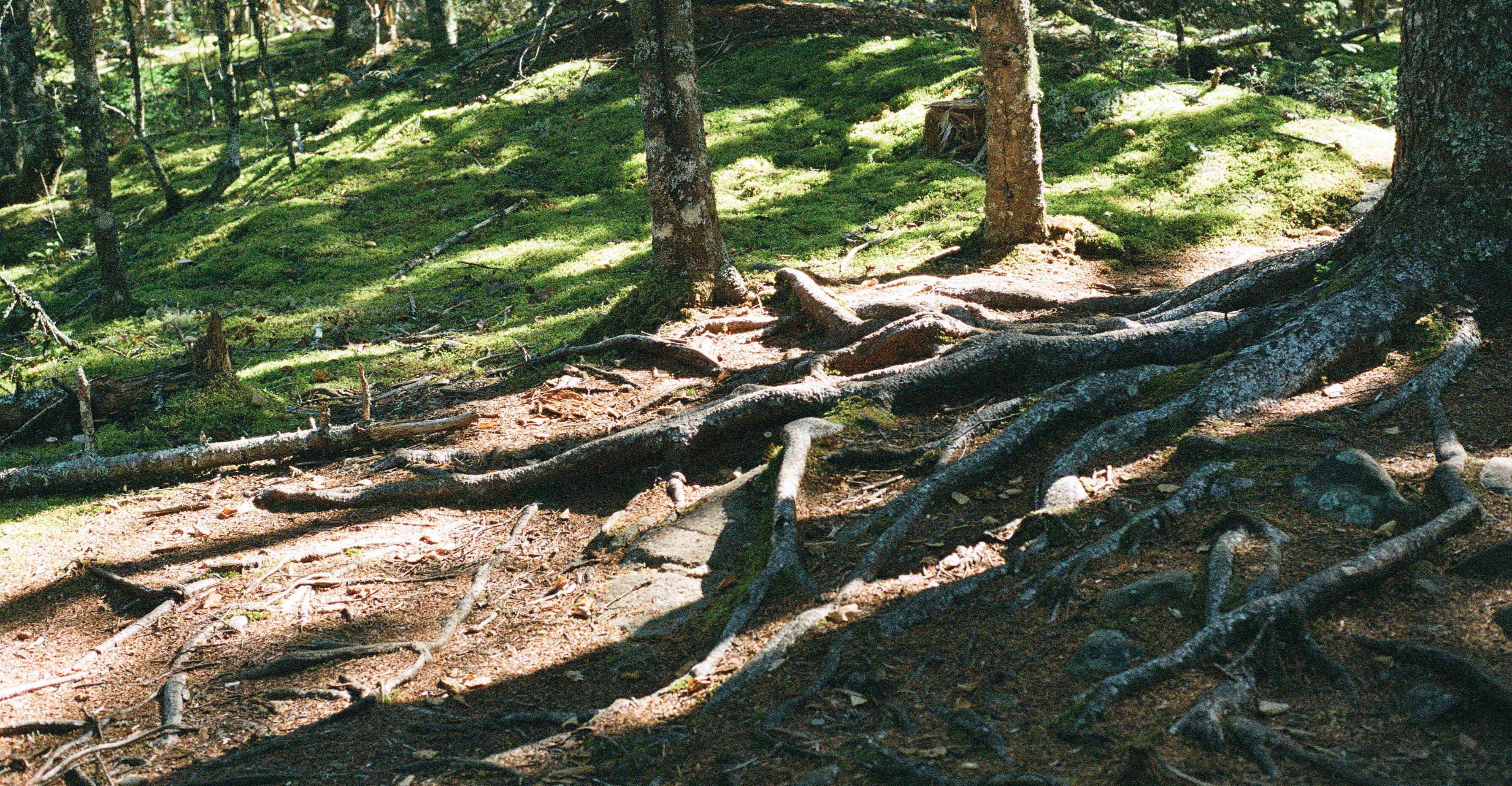
Would a decision hold the same weight if it could not be received? If there was no-one close or important to us to receive our decisive action, would it still be considered worth uttering?
Are not our decisions the longings towards moving mountains, clearing waters, bringing forth to those who matter what is most alive in our hearts? If our decisions are just our own, how do we make sense of why we decision make?
It is in the context of a world of relations that decisions hold their weight. We may claim that our decisions are for ourselves, yet if there is nobody to push our decisions against, combine our decisive forces with, create the conditions that shape our decisions, our decisions would be nothing but sentiments of the heart.
In coming into the truth that decisions are a part of the reality of our entangled lives in relationship, may we be vulnerable about our longings for our decisions to be received by the village as sacred? To be seen for the gravity that our decisions represent is how we are recognized for the places in which we have outgrown ourselves, moved to take action and live the course of our lives with the insight we have now gained.
Yet, what I have witnessed within myself and in community, are the ways in which we still lack the trust and capacity to hold decisions as a shared reality that uplifts the decision maker in what their decision represents and brings in the needs of those who are impacted by the decision itself.
Too often I see us collapse when receiving impacts. We feel that if an impact is shared, we will not be able to, “get what we want,” and our decisions will be snatched from us, and it would serve us better to hide away our decisions, guarding them like a dragon might guard their eggs.
This dynamic maps onto many realities of our current world. The ways we have gravitated towards models of ownership over cooperation, domination over co-discernment, stonewalling and isolating over vulnerability and community process. It has for a long time, felt far easier to mark our territory than it has been to integrate the disturbance through a discerning dance of what is yours, what is mine, and what is ours.
A chance for decisions that land within the collective body
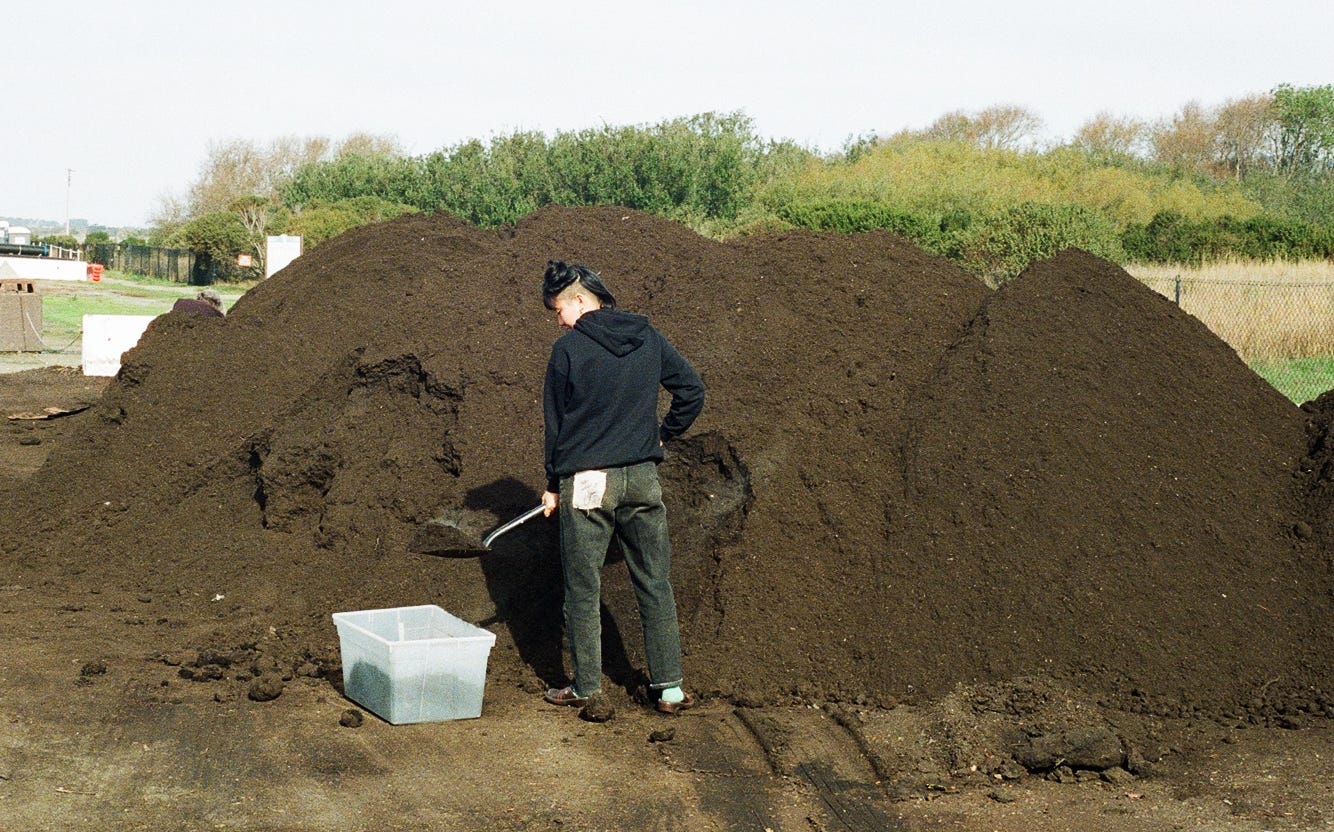
There’s are differences to the stages of decision-making that reflect the process in which a decision matures into good compost for the soil. It’s when a decision deeply lands and sticks within the collective body when we know we’ve heated up the compost pile enough for things to break down.
There are times when we speak decisions into the ether and it brings us a personal sense of security to release, but we might find that others in the collective body still feel tension, confusion, or unease. It’s possible that even after a decision is made, we don’t experience the peace we expect to after our boundaries have been named.
What often goes unspoken is that our decisions are never just our own. They touch upon those around us, and as relational beings, we long for our decisions to land not just for our own protection and agency but also to be nourishment for the whole.
It is a foundational belief in relationship ecology that we all offer to the ecology a potent and special kind of being that is only ours to offer and access. A blue jay has an offering completely different to a fern, yet both belong and are integral to the whole. It is in coming closer to resonance with what this offering is, where we begin to make decisions that coalesce with our sacred calling, trusting that it will feed and nourish the whole regardless of how it might be received in the beginning of a process.
The more we recognize our decisions as part of an integrated and flowing collection of experiences that dynamically upend and feed one another, the more we begin to hold decisions from a process orientation rather than a frozen and stagnant statement that reflects an unmoving expression to all situations and all possibilities.
When we bridge the understanding that our decisions are expressions of our sacred offerings to the world and the recognition that decisions are mutable, relational, and in mutuality, we arrive at the table not with a set, perfect, and clear decision but a presence and trust in the collective to hold the answers within our embodied yeses and nos.
Rather than reach for the perfection of the right decisive action that’ll meet all our needs, we have trust in the collaborative togetherness that’ll reveal the right decision through the commitment to staying with ourselves and encouraging the other to stay with themselves. Surrendering to the knowing that decisions which land in the collective body will compost into good soil, helps us recognize our part in co-discerning for community wellness over instinctual self-preservation.
resiliency in relationship requires acceptance of the constancy of impacts
When we are in panic1 our response to situations of great overwhelm is to go with whatever strategy we’re most comfortable with in attempts to immediately meet our needs. That could look like stepping out of relationship to take much needed space to regulate our nervous system or expressing angrily in attempts to receive attention and understanding.
Our well-versed protectors rise to the occasion when we feel backed against a wall.
Yet, these protective mechanisms, work to meet our immediate needs, but do they lead towards expanding our capacity for collaboration, growth, and connection down the line?
In our dreams of a renewed future that looks like village, models of shared land stewardship, schools that are not priming us into accepting carceral and militarized systems; we are faced with the question of who and what can genuinely evoke these alternative realities into being?
Is it our political leaders? Our economic systems? The state, or the federal government? Who do we turn to when we long for change? Is it true that we can take care of our own, and if so, why do so many of our visionary collectives and communities dissolve and disintegrate?
One sad but salient reality I often sit with is, how few of us have been nurtured to relate in relationships as adults. We have been given boatloads of stories of what love looks like: sacrifice, submission, people pleasing, self-betrayal.
We do not witness on a family scale, a community level, or a global political level, the ability to meet impacts on the other with the capacity to uphold these impacts as the key towards truth. When a hurt or impact is named, we witness how quickly this is dominated by power that fears what might get in the way of the train hurdling towards its destination.
The inconvenience of slowing down to tend to discontent is quite cumbersome when we’d prefer to find safety in the certainty of an isolated perspective. Inviting in impact, not fearing our impacts or the impacts of others, cultivates relationships that can endure, last, and be resilient in the face of the many seismic impacts of our current political and ecological reality.
If we as a continent, a nation, a community, a household can slow down to integrate what those of small island nations, houseless communities, children, elders, those at the edges, our parents who seem outdated, are saying, what world might we create?
If we invite the world around us to be part of our decision making, no longer seeing our absolute autonomy and race towards success as the only path towards belonging, might we partner with the pain, find wisdom in the impact, and grow trust in living outside of the echo chamber of our own mind?
以其不爭,故天下莫能與之爭。
Because he does not compete, the world cannot compete with him.
Chapter 66, Dao De Jing, Li-Young Lee and Yun Wang translation.
What looks to be in the way of lumbering towards certainty is perhaps, the answer. When difficulty arises and dashes our plans, this perhaps is not the enemy but the solution.
Making decisions for others; instant ease, distancing relatives
I learnt this past year what it means to try and make decisions that are “my own” when deciding whether to leave a community. I had been frustrated and upset with the community I was a part of for a variety of reasons, and I felt it was in my best interest to leave.
On the surface, I had my reasons for all the ways I wasn’t seen, the ways I felt undervalued, the moments where it seemed like the values of the community didn’t meet my expectations. Hidden under all these layers of resentment, assumption, and frustration, was a tiny voice expressing how little they felt they belonged, how afraid they were to show their neediness and vulnerability, and how sad they were to step away.
It was, in a lot of ways easier for me to conceptualize claiming my own autonomy and freedom by stepping away and making my own decision than it was to come raw and honest with the pain I carried in my heart.
But by choosing to walk away and base my decision on leaving on behalf of the voices on the surface; I wasn’t giving people the opportunity to genuinely meet me. I was orchestrating a complex symphony of trying to get my needs met through the strategy I felt most comfortable with.
The strategy that gives us the sense of the most control often feels to be the safest. It is the tried-and-true plan, it meets us in our urgency, and the immediacy of relieving our responsibility to hearing the other. When we set out with the clarity of what needs to happen for things to work out how we want them to, our body relaxes, our nervous system feels at ease, we find instantaneous relief at the clarity of what the future holds.
However, because this clarity is uninformed by those impacted by our decision, the result of the decision, in my experience, never hits on a deeper level. Part of it, is that there are deeper needs of belonging hidden beneath the immediacy of safety, comfort, and ease. When we make decisions that relieve our surface needs and not what drives the pain inlaid in our decisions, we get to move on, but not to heal these deeper wounds.
Rewriting old patterns through integrating the impact held up by others
Having withdrawn from communities when getting too close to my unbelonging wound, I had a lot of experience with tapping out and silencing my needs as a strategy to preserve my nervous system and hide from vulnerability.
This time around, I got to experience something different. The deeper we go in taking on shared risk, intimacy, and commitment, our most painful wounds start to surface. It is not a matter of who2 instigates our wounds, it’s a matter of when.
This time, two people in the community, started to express to me the impact that me wanting to leave the community was having on them. At first it felt annoying, it was like they were thwarting my plans by demanding to be seen in their hurt and frustration with my decision. They expressed how it would change their lives to see me go, how it would change their relationship with me, how scared they felt by the sudden departure I was proposing to take.
At first, I was defensive, how could they not see the hurt I was experiencing? Wasn’t it my right to do what I wanted to do with my commitments?
Yet they kept reiterating how confusing it was to receive a decision like, leaving the community, because it wasn’t nuanced, it wasn’t clear, it didn’t acknowledge the agreements I made when joining the community.
And then they started asking me questions like: is this decision coming from your child or adult self? Do you see the difference between expressing your emotions and genuinely being vulnerable? If you were to partner with us in asking the community to meet your needs, what would that look like?
This process of discerning how to be with this decision of whether I should leave the community started to stretch out over the course of days, weeks, then months. At first, I felt anger towards them because I saw no other way to respond to this pain, so how could they expect anything else?
But what began as a decision to leave the community started to reveal a different story. That what was happening was I was beginning to encroach the depth that my darkest, most painful community rupture had formed within my body and spirit. I started to soften to the recognition that the decision was more of a reaction to the fear of feeling the pain of these past experiences than it was about being the “right” decision for me.
By being with this tangle of emotional sifting, they supported me to stay with the intensity, making smaller decisions that cleared me up to discern even further.
I stepped back from the weekly meetings and found within me what felt like a genuine contribution to the community. I stepped off the group chat and realized I had the opportunity to feel belonging outside of the false pretense of belonging that the chat had offered me. I left the teams and stepped up to support the plaster efforts of a house being built, committed another year to continuing to build for the community as a separate organization, and began to invite in projects that wove my home into the community ecosystem even though I had moved 8 miles away.
What I had declared as leaving the community was my attempt to be with the truth that I was coming into a deeper recognition of maturation within myself that the community had supported me in actualizing. But when I sat with this truth alone, I felt my only option was to separate and sever because I couldn’t imagine a possibility of integrating my new self into the community because it required vulnerability to be seen in my change and even scarier, the possibility of rejection for those changes. Of course I couldn’t imagine this alone, it wasn’t mine to do alone because it required the participation of others!
Resonating within me was Malidome Somé saying, “conflict is the spirit of the relationship asking itself to deepen.” And in a live system and ecology, as we stick with community for longer, our deeper wounding will undoubtedly begin to surface, asking for more healing.
Recently, the two people who’d expressed the impact of my decision on them, shared with me that they felt home with me, and felt that I was integral to their family. I knew it was a big deal for them to share this, and I knew that they felt this with me because they trusted I would slow down enough to integrate their experience into my decision-making process.
When I would get into a mode of determination to make a change “for myself,” I noticed that I would lean on decisions that would immediately empower me in a sense of autonomy but hide the deeper needs that would make me vulnerable to admitting to the relational needs I was too scared to name I need.
So, as a placeholder, my learnt self-preservation within domination culture, that expects freedom and satisfaction from believing only I know what is best for me rises to the occasion.
Perhaps it is our trauma of having loss our communities and our fear of the grief inherent to relationships that has us veering towards stories that verify the decision-making process of one. It isn’t a bad choice; it just doesn’t lead towards the collective integration of creating good soil for our mutual growth and deepening.
I don’t want healing that only supports my own pathway to surviving capitalism. I want healing that cultivates the ground for all our children to grow up in an ecosystem that doesn’t require them to conform in order to be loved.
The being into family, asks who we are accountable to creating good soil with
In a culture that doesn’t know family outside of nuclear familydom norms, the cultivation of spirit kin is one of the radical acts of being into family-hood that attempts to weave tighter threads of togetherness.
By making ourselves vulnerable to the impacts we have on each other, we welcome the grand opportunity that this offers to us in seeing that having impact is a sign that we matter! We easily default into the punitive narrative that impacting others is a reflection of our badness, and requires “doing time,” to clean our slate.
When we recognize that fielding the emotional impact others express has little to do with our moral legitimacy, and everything to do with the other’s longing to belong in relationship to us, we can live in the in-between zone where creative nuance and the practice of co-discernment live.
It is when we invite in all the ingredients, the dying excrement, the porousness necessary to heat up the living organic matter, the literal mess and gunk of it all, to sit, aerate, and transform in front of our eyes, where personal decisions fall away from their seat of importance and we recognize the futility in designing our lives, and the sacred mundanity to being loved through the mess.
In living with the messiness in community, we don’t get to have the clean decisive narrative that our set decisions get to curate. Rather, we must wait to see what must be added and balanced for the compost pile to fully evolve into good soil. It is a practice of sitting with the discomfort and allowing relationship to evoke our actions, where we discover the endless possibilities available to us when co-discernment becomes a practice we can trust.
To make good soil in this lifetime, I know I must transform the traumas I’ve inherited and co-created. I want to be accountable to what’s possible when taking seriously the work of building structures that house movement. The kind of movement that knows how to cycle and die well, naturally and with dignity for all, the kind of movement that knows life is at each stage, and can gently transform with the slow ease of the cycles of the land.
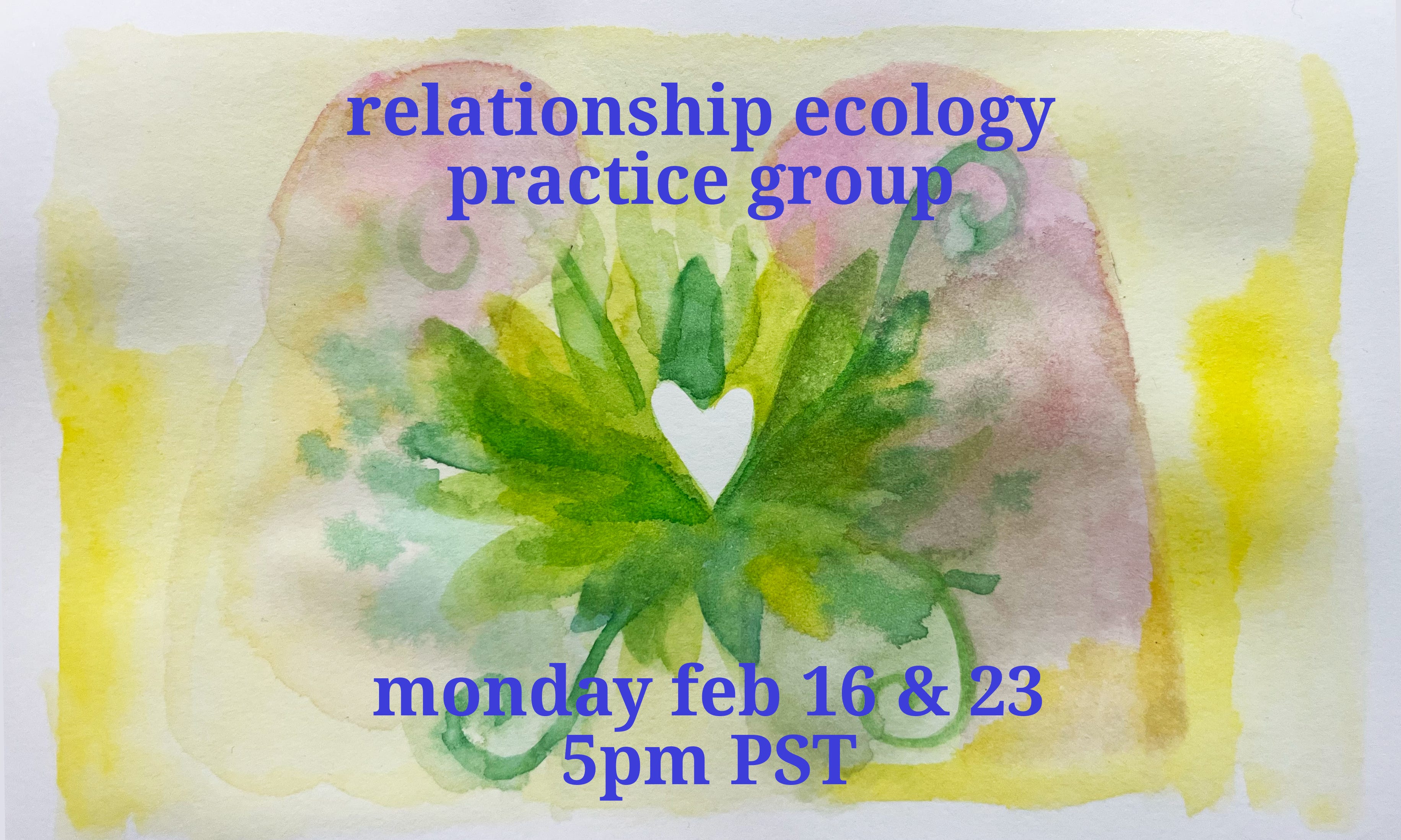
Thank you all for reading, this was a meaty one, and again as usual has enlivened within me many pathways and tendrils of further elaboration. Rishi and I will be offering two more practice groups this month, and we would love to see you there, sharing with us your relational inquires in a space curious about how we might cultivate the kinds of kinship that can create worlds of renewed possibilities.
The three zones of awareness are comfort, stretch, and panic. In panic, we are in overwhelm and oftentimes are reaction from a place of learned reactivity rather than having the opportunity to stretch into new ways of reacting. The stretch zone is the heart of re-learning and growth.
The idea that whatever patterns and inner woundings we hold do not disappear based on the person we relate with, but are carried over from relationship to relationship until we confront those patterns and choose to heal.

“making decisions for others” as a strategy to avoid vulnerability is strong and honest. that's most powerful
Oh, this really lands for me. I left a community at one point in this way that was about my "self-determination." It took years to heal those relationships. I find myself tempted toward the same move now but have been trying to slow down. Thank you for this clear guide!